A Historic Moment for Fish Welfare in Africa
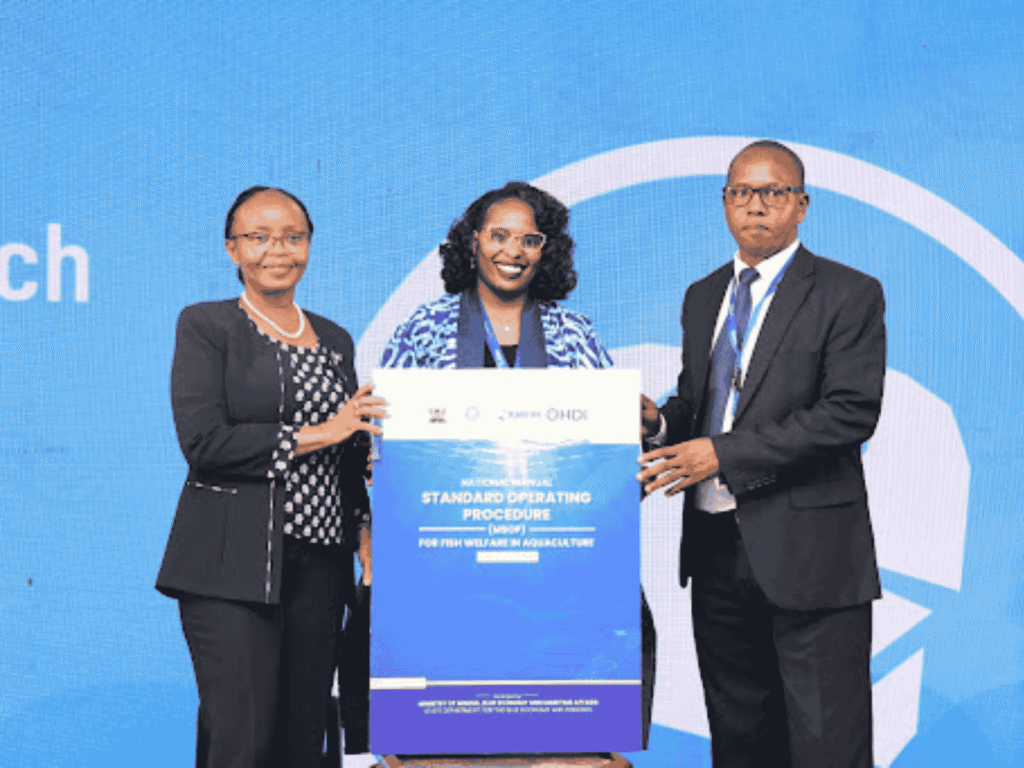
On 17 June 2026, during the 11th Our Ocean Conference (OOC11) in Mombasa, Kenya, the Government of Kenya officially launched the National Manual Standard Operating Procedure for Fish Welfare in Aquaculture (FW-MSOP), becoming the first African country to adopt and launch a comprehensive national framework dedicated to fish welfare governance.
The launch marks a significant milestone not only for Kenya’s aquaculture sector but also for the broader African continent. For the first time, fish welfare has been formally integrated into a national governance framework that provides clear standards, implementation mechanisms, inspection systems, capacity development pathways, and a roadmap for long-term institutionalization.
For many stakeholders involved, this moment represents the culmination of months of technical work and consultation. For One Health and Development Initiative (OHDI), it also represents the realization of a vision with the establishment of the Africa Fish and Aquaculture Welfare (AFIWEL) Program that began only a few years ago.
Yet, the launch is not the end of the journey. It is the beginning of a new chapter.
Why Fish Welfare Matters
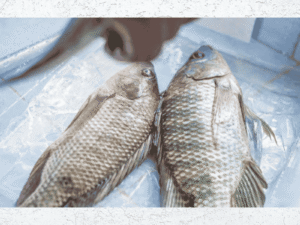
Fish are among the most numerous animals farmed and harvested globally for food and nutrition. Across Africa, aquaculture is expanding rapidly as governments seek to improve food security, create employment opportunities, strengthen rural livelihoods, and contribute to economic growth.
Despite this growth, fish welfare has historically received limited attention within policy, regulatory, and operational frameworks across many countries. Poor handling practices, inappropriate stocking densities, inadequate transport conditions, weak biosecurity systems, and the absence of humane slaughter standards can negatively affect the well-being of fish while also contributing to disease outbreaks, reduced productivity, economic losses, food safety concerns, and environmental challenges.
Increasingly, governments, researchers, producers, and international organizations are now recognizing that fish welfare is not only an ethical issue but also an issue of productivity, sustainability, food safety, trade, and One Health.
Improving fish welfare contributes to:
- Better animal health outcomes;
- Improved farm productivity and efficiency;
- Reduced disease risks;
- Reduced dependence on antimicrobials;
- Stronger biosecurity systems;
- Improved product quality;
- Increased consumer confidence;
- Enhanced access to local and international markets; and
- More sustainable aquaculture systems.
These realities formed the foundation for the ideation and implementation of the AFIWEL Programme and ultimately the Kenya FW-MSOP.
The Beginning: How the Journey Started
The Africa Fish and Aquaculture Welfare (AFIWEL) Programme was established with a simple but ambitious vision to support African countries in strengthening and advancing responsible, welfare-driven and sustainable aquaculture systems.
When AFIWEL began its work, one challenge became immediately apparent. While several countries had policies and regulations governing aquaculture production, fish health, environmental management, and food safety, few had comprehensive frameworks specifically addressing fish welfare across the entire aquaculture value chain.
In a few cases, fish welfare was referenced indirectly through provisions relating to water quality, disease management, or farm operations, but there were limited holistic practical tools available to guide implementation, inspection, monitoring, and continuous improvement.
Recognizing this gap, AFIWEL began engaging governments, researchers, regulators, development partners, producers, and other stakeholders to explore how fish welfare could be integrated into national aquaculture policy and governance systems in a practical and context-specific manner. Kenya emerged as one of the countries demonstrating strong interest, leadership, and commitment to integrating and advancing fish welfare policy and governance at national and sub-national levels.
Building the Partnership

From the outset, the process to develop the FW-MSOP was designed to be government-led, multi-sectoral, nationally owned, and evidence-based. Therefore, a partnership was established involving:
- The State Department for the Blue Economy and Fisheries (SDBEF);
- Kenya Fisheries Service (KeFS);
- Kenya Marine and Fisheries Research Institute (KMFRI); and
- One Health and Development Initiative (OHDI) through the AFIWEL Programme.
This partnership brought together policy leadership, regulatory authority, scientific expertise, implementation experience, and technical support. The objective was clear, to develop a practical, science-based, nationally relevant framework that could strengthen fish welfare governance across Kenya’s aquaculture sector.
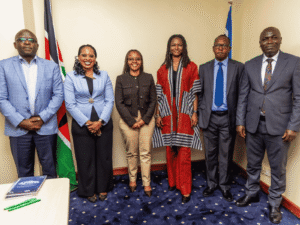
Understanding the Problem: Situational Analysis and Gap Assessment
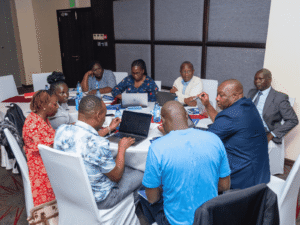
Before standards could be developed, stakeholders first needed to understand the existing situation. A comprehensive situational analysis and regulatory gap assessment was undertaken to examine existing laws and regulations, aquaculture production systems, fish health and welfare practices, institutional capacities, inspection systems, training needs, research gaps; and opportunities for strengthening governance.
The assessment revealed several recurring challenges, including limited welfare-specific guidance, lack of welfare monitoring and inspection, poor handling and transport practices, variable biosecurity standards, lack of humane slaughter guidance, inadequate welfare training opportunities; and limited data on fish welfare outcomes. The findings provided the evidence base for the development of the FW-MSOP.
A Multi-Stakeholder Development Process
One of the defining strengths of the FW-MSOP development process was its commitment to inclusivity, collaboration, and national ownership. From the outset, the Government of Kenya recognized that establishing a credible and implementable fish welfare framework would require the active participation of stakeholders across the aquaculture value chain and beyond.
Stakeholder Consultations
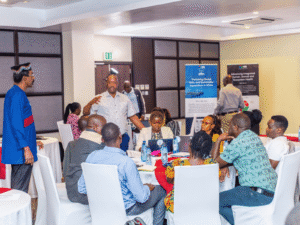
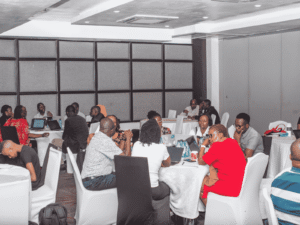
The development of the FW-MSOP was informed by extensive consultations conducted during a National Inception and Action Planning meeting with a diverse range of stakeholders across Kenya’s aquaculture sector. These engagements were designed to ensure that the framework reflected both scientific evidence and the practical realities experienced by actors throughout the value chain.
Participants included representatives from national government ministries and agencies, county governments, aquaculture producers, researchers, academic institutions, fisheries and aquaculture extension officers, industry actors, development partners, and civil society organizations. Through workshops, technical meetings, consultations, and stakeholder dialogues, participants shared experiences, identified challenges, highlighted existing gaps, and contributed recommendations for strengthening fish welfare governance within the Kenyan context.
These consultations played a critical role in shaping the priorities, standards, implementation mechanisms, and institutional arrangements that ultimately formed the foundation of the FW-MSOP.
Establishment of the TWG
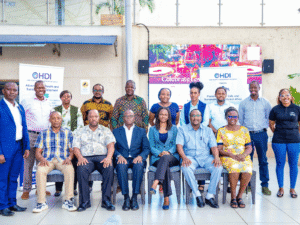
To guide the process, a Fish Welfare Technical Working Group (FW-TWG) was established during the AFIWEL National Inception and Action Planning Workshop. The TWG served as the primary technical body responsible for steering the development of the framework, providing scientific guidance, reviewing technical content, and ensuring alignment with Kenya’s national priorities and international commitments.
Technical Drafting and Framework Development

Building upon the findings from stakeholder consultations and situational assessments, the Fish Welfare Technical Working Group (TWG) embarked on an intensive technical drafting process. The objective was to develop a practical, evidence-based, and nationally relevant framework capable of guiding fish welfare governance across Kenya’s diverse aquaculture production systems.
The drafting process drew heavily from the AFIWEL Continental Framework for Fish Welfare Manual Standard Operating Procedures (FW-MSOP), developed by the One Health and Development Initiative (OHDI) under the Africa Fish and Aquaculture Welfare (AFIWEL) Program. The continental framework is an evidence-based resource informed by a wide range of sources, including existing national policies and legislation, aquaculture regulations, scientific literature, international best practices, and globally recognized guidance from organizations such as the World Organisation for Animal Health (WOAH) and the Food and Agriculture Organization of the United Nations (FAO).
Through a structured adaptation process, the TWG contextualized the continental framework to reflect Kenya’s specific aquaculture production systems, regulatory environment, institutional capacities, environmental conditions, and socio-economic realities. Particular emphasis was placed on ensuring that international standards and recommendations were translated into practical and achievable measures that could be effectively implemented within the Kenyan context.
The outcome of this process was the development of a comprehensive Fish Welfare Manual Standard Operating Procedure that balances scientific rigor with practical applicability. The framework provides clear guidance for producers, regulators, inspectors, veterinarians, researchers, and other stakeholders, while supporting the progressive integration of fish welfare principles into Kenya’s aquaculture sector.
Public Participation and Review
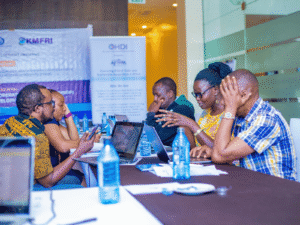
Recognizing the importance of transparency and public accountability, the draft FW-MSOP was subjected to a formal public participation process. A public call for comments was issued, providing stakeholders across the country with an opportunity to review the draft document and submit feedback.
This process enabled broader engagement beyond the Technical Working Group and ensured that additional perspectives could be incorporated before finalization. Comments received from stakeholders helped strengthen the document, improve clarity, refine implementation approaches, and enhance the overall relevance of the framework.
The public review process also fostered a sense of collective ownership, reinforcing the principle that the FW-MSOP was not merely a technical document but a nationally developed framework shaped through broad consultation and consensus.
National Validation Workshop
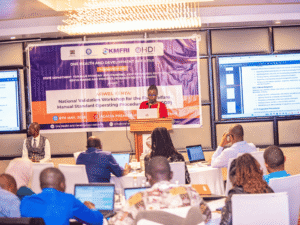
A major milestone in the development process was the National Validation Workshop, which brought together representatives from government institutions, research organizations, academia, development partners, private sector actors, and other key stakeholders to review the near-final draft of the FW-MSOP.
The workshop provided an important platform for technical review, discussion, and consensus-building. Participants carefully examined the proposed standards, implementation mechanisms, inspection approaches, and institutional arrangements to ensure that the framework was scientifically sound, operationally feasible, and aligned with national priorities.
The validation process also provided an opportunity to harmonize technical inputs received throughout the development journey, address outstanding issues, and strengthen areas requiring further refinement. By the conclusion of the workshop, stakeholders had reached broad consensus on the content and direction of the framework, paving the way for its finalization and eventual launch.
The National Validation Workshop represented more than a technical review exercise; it served as a powerful demonstration of Kenya’s collective commitment to advancing fish welfare as an integral component of sustainable aquaculture, responsible food systems, and Blue Economy development.
Developing the Tools for Implementation

A key milestone in the development of the FW-MSOP was the creation of the Fish Welfare Inspection Tool (FWIT). While the FW-MSOP establishes the standards and expectations for fish welfare, the FWIVT provides the practical mechanism for assessing, monitoring, and verifying compliance in the field.
Developed through a collaborative process as usual, the FWIT introduces standardized inspection procedures, measurable welfare indicators, risk-based scoring systems, documentation protocols, and data collection mechanisms. Together, these components enable fish welfare to be assessed consistently and objectively across different aquaculture production systems.
By transforming fish welfare standards into a practical inspection and monitoring framework, the FWIT bridges the gap between policy and implementation, providing Kenya with a robust foundation for evidence-based fish welfare governance and continuous improvement across the aquaculture sector.
Building Capacity for Implementation
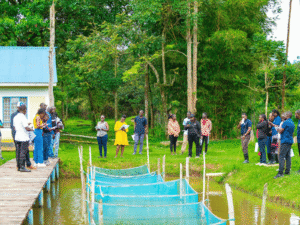
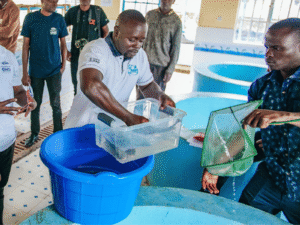
Recognizing that effective implementation would require skilled personnel, Kenya invested in capacity development even before the official launch of the FW-MSOP. In May 2026, a national Training of Trainers (ToT) programme was conducted to establish the country’s first cohort of certified fish welfare inspectors.
The training equipped participants with the knowledge and practical skills needed to apply the FW-MSOP and test the draft Fish Welfare Inspection Tool (FWIT), laying the foundation for future inspection, monitoring, extension, and compliance activities. By building this initial pool of trained professionals ahead of implementation, Kenya demonstrated its commitment to ensuring that the FW-MSOP becomes a practical tool for improving fish welfare across the aquaculture sector, rather than simply a policy document on paper.
The Launch at the Our Ocean Conference
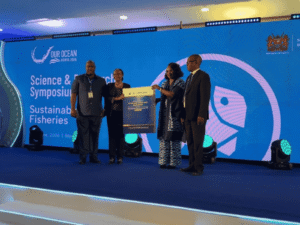
The journey reached a historic milestone in June 2026 when the Government of Kenya officially launched the National Manual Standard Operating Procedure for Fish Welfare in Aquaculture (FW-MSOP) during the 11th Our Ocean Conference (OOC11) in Mombasa. The launch brought together global stakeholders including government officials, researchers, technical experts, development partners, and stakeholders from across the fisheries and aquaculture sector to celebrate the culmination of months of collaboration, consultation, and technical development.
Launching the FW-MSOP at one of the world’s leading conferences on ocean sustainability and the Blue Economy underscored the growing recognition that fish welfare is an integral component of responsible aquaculture, sustainable food systems, environmental stewardship, and economic resilience. It also provided Kenya with an opportunity to showcase its leadership and commitment to advancing evidence-based fish welfare governance on both the regional and global stage.
As the first African country to develop and launch a comprehensive national framework dedicated to fish welfare in aquaculture, Kenya has established an important precedent for the continent. The launch not only marked the adoption of a new national framework but also signaled Kenya’s emergence as a continental leader in promoting responsible, welfare-governed aquaculture systems.
What Makes the FW-MSOP Significant?
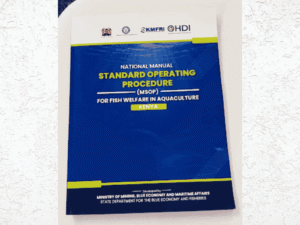
The significance of the FW-MSOP lies in the fact that it moves fish welfare beyond awareness, advocacy, and voluntary good practice into the realm of structured governance and implementation. Rather than serving as a standalone guidance document, the FW-MSOP establishes a comprehensive national framework for integrating fish welfare into Kenya’s aquaculture sector.
The framework provides clear welfare standards and operational procedures across the aquaculture value chain, supported by inspection and certification systems, compliance mechanisms, capacity development programmes, research and monitoring frameworks, institutional coordination arrangements, and a phased roadmap for implementation and scale-up. Together, these components create a practical system for promoting, assessing, and continuously improving fish welfare outcomes at farm, county, and national levels.
Importantly, the FW-MSOP adopts a One Health approach, recognizing that fish welfare is closely linked to animal health, environmental sustainability, food safety, antimicrobial stewardship, and public health. By embedding welfare within this broader systems perspective, the framework positions fish welfare not only as an ethical responsibility but also as a key contributor to sustainable aquaculture, resilient food systems, and long-term Blue Economy development.
What Happens Next?
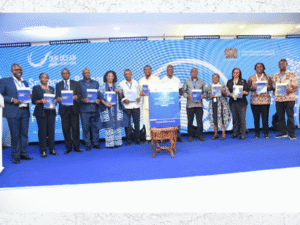
While the launch of the FW-MSOP represents a major milestone, it also marks the beginning of a new phase focused on implementation. The ultimate success of the framework will depend on its ability to translate policy and standards into measurable improvements in fish welfare, farm management practices, regulatory oversight, and aquaculture performance across Kenya.
The initial phase of implementation will focus on piloting the framework in selected counties representing different aquaculture production systems. These pilot activities will provide an opportunity to test implementation approaches, generate baseline data, identify lessons learned, and refine operational processes before broader national scale-up.
A central component of this phase will be the deployment of the Fish Welfare Inspection Tool (FWIT), which will be used to conduct fish welfare inspections, establish baseline welfare assessments, and support ongoing monitoring and compliance activities. The data generated through these assessments will provide valuable insights into welfare conditions across production systems and help guide future interventions.
Implementation will also be supported by continued investments in capacity development. Veterinarians, additional inspectors, producers, and other stakeholders will receive training on fish welfare principles, the application of the FW-MSOP, and the use of the FWIT. This will help strengthen the technical capacity required to sustain implementation efforts at both county and national levels.
To improve monitoring, reporting, and decision-making, digital compliance systems will be introduced to support data collection, welfare assessments, inspection reporting, and performance tracking. These systems will contribute to greater transparency, consistency, and accountability in fish welfare governance.
At the same time, implementation will generate important evidence and learning opportunities. Data collected through inspections, monitoring activities, and field implementation will help strengthen future improvements, support adaptive management, and inform ongoing policy and programme development.
Ultimately, lessons emerging from the pilot phase will guide the gradual expansion of the FW-MSOP across additional counties and aquaculture production systems, laying the foundation for nationwide adoption and long-term institutionalization of fish welfare governance in Kenya.
Looking Beyond Kenya
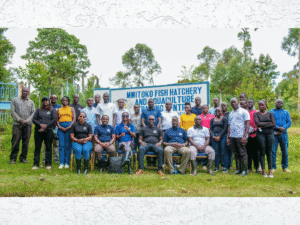
While the launch of the FW-MSOP is a significant achievement for Kenya, its potential impact extends far beyond national borders. As the first comprehensive national framework for fish welfare governance in Africa, the FW-MSOP provides an important example of how fish welfare can be integrated into aquaculture policy, regulation, capacity development, inspection systems, and sector governance in a practical and nationally owned manner.
The lessons, experiences, and tools developed through Kenya’s journey will provide valuable insights for other African countries seeking to strengthen fish welfare, responsible aquaculture, and sustainable food systems. Through the Africa Fish and Aquaculture Welfare (AFIWEL) Programme, these learnings will help inform future engagements with governments, regulators, researchers, and industry stakeholders across the continent.
Importantly, the objective is not to replicate Kenya’s framework identically in every country. Aquaculture systems, policy environments, institutional capacities, and development priorities vary considerably across Africa. Instead, the Kenya experience demonstrates a process that can be adapted and tailored to different national contexts. By supporting countries to develop solutions that reflect their unique realities while drawing upon shared principles and best practices, AFIWEL aims to contribute to a growing movement towards stronger fish welfare governance and more sustainable aquaculture systems across Africa.
As additional countries begin exploring similar initiatives, Kenya’s leadership has created a foundation upon which a broader continental conversation on fish welfare can continue to grow, evolve, and generate lasting impact.
A Milestone Worth Celebrating
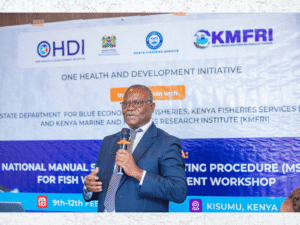
The launch of Kenya’s National Manual Standard Operating Procedure for Fish Welfare in Aquaculture is a powerful demonstration of what can be achieved when governments, researchers, technical experts, development partners, industry actors, and other stakeholders come together around a shared vision for positive change. What began as an idea to strengthen fish welfare governance has evolved into a nationally owned framework that has the potential to influence policy, practice, and outcomes across Kenya’s aquaculture sector for years to come.
The FW-MSOP demonstrates that fish welfare can move beyond discussion and aspiration to become embedded within national systems, institutions, policies, and implementation frameworks. It shows that welfare considerations can be integrated into broader conversations around sustainable aquaculture, food security, animal health, environmental stewardship, trade, and economic development.
Perhaps most importantly, the launch signals a future in which fish welfare is increasingly recognized as an essential component of responsible aquaculture and sustainable Blue Economy development. It highlights the growing understanding that improving fish welfare is not only beneficial for fish, but also for farmers, consumers, ecosystems, and the long-term resilience of aquatic food systems.
For everyone who contributed to this journey, the launch represents a moment of pride and celebration. For Kenya, it is a moment of leadership and innovation. For Africa, it is an important milestone in the advancement of fish welfare governance. And for the future of responsible aquaculture on the continent, it marks the beginning of an exciting new chapter.