Gaborone, Botswana | 28–30 July 2026
As antimicrobial resistance (AMR) interventions move from project design into implementation, an important question remains: how can project teams ensure that the systems, capacities, partnerships, behaviours, and outcomes they build can continue to deliver impact beyond the period of external funding?
This question was at the centre of a three-day ICARS Sustainable Impact and AMR Workshop, held from 28–30 July 2026 at the Cresta President Hotel in Gaborone, Botswana.
The workshop brought together the ICARS-supported Botswana project team, ICARS advisors, and members of the consortium developing the ICARS Sustainable Impact and AMR Toolkit. It formed part of the project’s country-level onboarding phase, during which the near-final Toolkit is being applied with ICARS-supported AMR projects to strengthen sustainable impact planning while generating practical feedback ahead of its finalisation and wider dissemination.
Why Botswana?
Botswana was selected as one of the ICARS-supported projects participating in the final onboarding and application phase of the Sustainable Impact and AMR Toolkit, alongside projects in Kenya, Ghana, and Uganda.
The Botswana project provides a particularly valuable setting for applying the Toolkit because its work addresses infection prevention and control (IPC), healthcare-associated infections, surveillance, policy and systems strengthening within the country’s wider AMR response. The project is organised across three interconnected work packages, allowing participants working on different aspects of the intervention to examine sustainable impact from their respective perspectives while considering the project as a whole.
Importantly, the project is at a stage where sustainability considerations can still meaningfully shape implementation. Rather than waiting until project closure to ask what will continue, the workshop provided an opportunity to consider these questions while project systems, partnerships, monitoring arrangements, capacities, and implementation approaches are still being developed.
This reflects a central principle of the Sustainable Impact Framework: sustainable impact should be progressively built throughout the project lifecycle, not retrofitted at the end.
Bringing Together the Botswana Project, ICARS and the Consortium
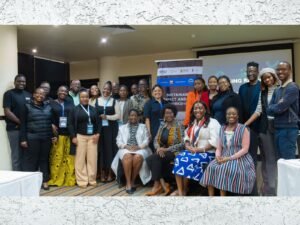
The workshop brought together 33 participants, comprising 26 members of the ICARS Botswana project team, two ICARS representatives, and five members of the Sustainable Impact and AMR project team.
The Sustainable Impact consortium was represented by Dr Kikiope Oluwarore, Executive Director of the One Health and Development Initiative (OHDI) and Project Lead; Professor Benjamin Emikpe of the Kwame Nkrumah University of Science and Technology (KNUST); Dr Ayodele Majekodunmi of Ajisefini Consulting; Pharm. Estelle Mbadiwe of Ducit Blue Foundation; and Dr Abdullah Al-Awal of OHDI.
The workshop was also supported by ICARS representatives Dr Watipaso Nyirenda and Dr Mabel Ortiz De Leo, providing an important connection between the Toolkit development process, ICARS’ wider approach to sustainable AMR solutions, and the realities of country-level implementation.
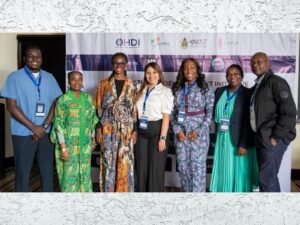
The diversity of participants was particularly valuable. Bringing together stakeholders working across the project’s different work packages created space for multidisciplinary discussion about what sustainability means from technical, institutional, policy, implementation, financing, and monitoring perspectives.
Three Days of Learning, Reflection and Practical Application
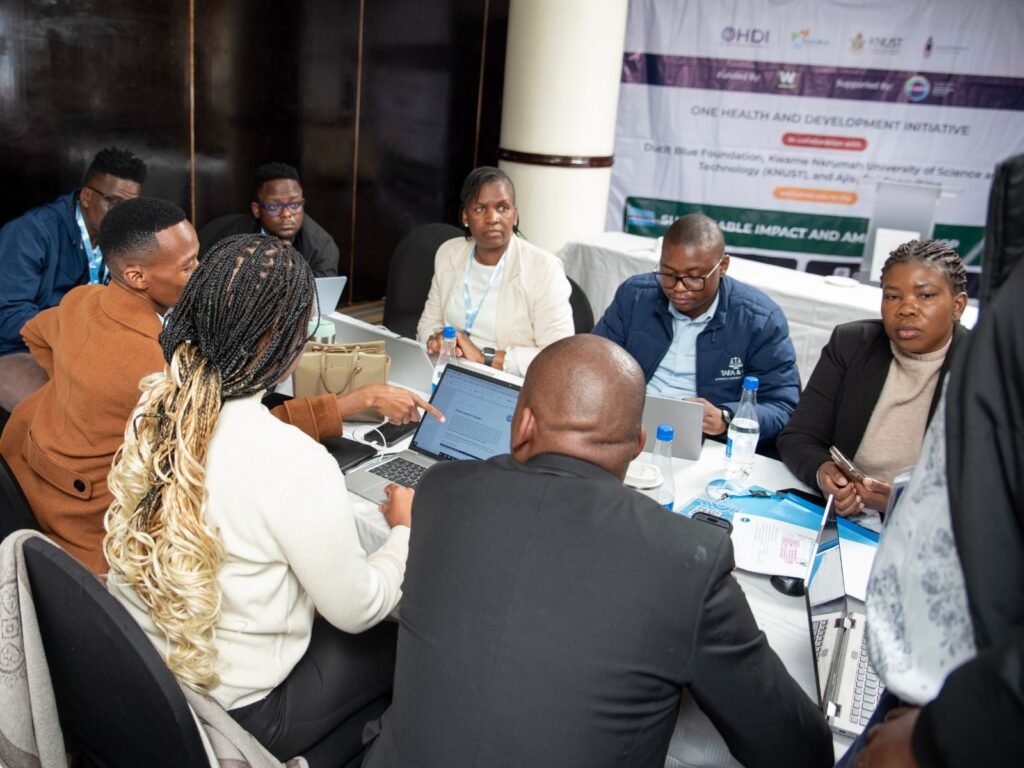
The workshop was intentionally designed to be hands-on rather than presentation-heavy.
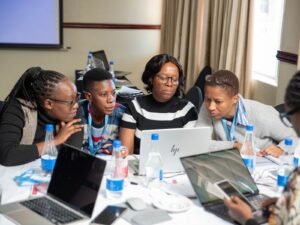
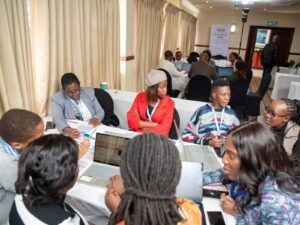
Following introductory sessions on the Sustainable Impact and AMR Project, the Botswana project, and the Sustainable Impact Framework, participants worked in groups corresponding to the project’s three work packages. Each group applied the Toolkit directly to its own project activities and experiences.
Across the three days, participants explored sustainable impact from different points in the project lifecycle, from planning and project diagnostics to proposal development, resource mobilisation, measurement, Theory of Change, and planning for project exit and continuity.
The first day focused on introducing the Sustainable Impact Framework and helping teams assess how sustainability considerations were reflected within their existing project plans. Participants used the Sustainable Impact Planning Checklist and Project Diagnostics to structure discussions around existing strengths, opportunities, challenges, and areas requiring further attention.
On the second day, the focus shifted towards integrating sustainable impact into project design and implementation, including proposal development, resource mobilisation and financial sustainability, and exit and continuity planning.
The final day explored how sustainable impact can be incorporated into Monitoring, Evaluation and Learning (MEL) and Theory of Change, before participants brought the different strands of the workshop together through project-specific sustainable impact action planning.
Moving from Assessment to Action
A particularly important aspect of the Botswana workshop was that the Toolkit was not used simply to assess whether sustainability was “good” or “poor.”
Instead, participants were encouraged to ask a more useful question: What can we do now to strengthen the likelihood that this project achieves sustainable impact?
The three work-package groups therefore used their reflections to identify and contextualise recommended actions relevant to their areas of work and consider how these could be incorporated into existing project processes.
Participants also explored the financial and non-financial resources that could contribute to continuity, the stakeholders and institutions that may have longer-term roles, and how project monitoring and Theory of Change processes can better capture the conditions needed for sustainable impact.
This action-oriented approach is central to the Toolkit. Sustainable impact is not treated as a fixed score or end-of-project judgement, but as something that can be planned for, strengthened, monitored, and adapted over time.
Learning from the People Who Will Use the Toolkit
The Botswana workshop was equally an opportunity for the consortium to learn from potential users of the Toolkit.
Participants provided structured feedback on the relevance, clarity, usability, and practical application of its different components. Overall, the workshop feedback showed strong appreciation of the Toolkit’s relevance and technical content, while also generating practical suggestions for making it easier and more flexible to use.
Importantly, participants highlighted the value of clear instructions, simple language, structured guidance, automated functions, and collaborative group application. The workshop also reinforced the need for flexibility to accommodate different project contexts, and practical examples and case studies that demonstrate how different components can be applied.
These insights are particularly valuable because the Sustainable Impact and AMR Toolkit has been developed through an iterative process. Evidence synthesis established its scientific foundations, but engagement with project implementers helps ensure that the final product is also practical in the environments where it is intended to be used.
Country Context Matters
Another important lesson from Botswana was the importance of grounding sustainable impact discussions within existing national systems and priorities.
Participants emphasised that AMR interventions do not operate in isolation. They sit within existing government structures, National Action Plans, IPC guidance, institutional arrangements, financing environments, professional networks, and other national systems.
The Toolkit must therefore help projects recognise and build on these structures rather than assume that new systems always need to be created.
This reinforces another central principle of the Sustainable Impact Framework: there is no universal pathway to sustainable impact. The Toolkit provides evidence-informed guidance, but project teams must contextualise that guidance according to their intervention, institutions, resources, stakeholders, and country realities.
An Important Milestone Towards the Final Toolkit
The Botswana workshop represented an important milestone in the co-development of the ICARS Sustainable Impact and AMR Toolkit.
It demonstrated how the Framework and tools can facilitate structured conversations among different members of an AMR project team, help identify sustainability considerations that may otherwise receive limited attention, and support teams in translating reflection into practical actions.
At the same time, the experience generated valuable lessons that are now contributing to further refinement of the Toolkit—including clearer guidance, greater flexibility, improved usability, and the addition of practical case studies to illustrate how different components can be applied.
As the project progresses through its remaining country engagements and towards finalisation, lessons from Botswana will contribute to ensuring that the final Toolkit is not only evidence-informed, but practical, adaptable, context-sensitive, and grounded in the realities of AMR implementation.
Ultimately, the aim is to help AMR projects move beyond delivering successful activities within a defined funding period towards creating the institutional capacity, ownership, systems, partnerships, resources, and pathways required for impact to endure.