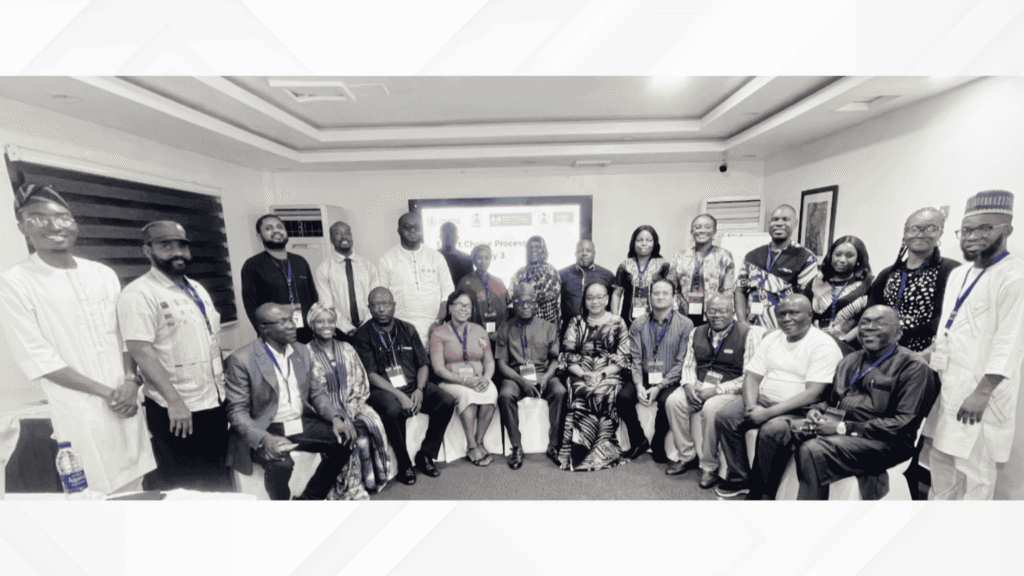
As antimicrobial resistance (AMR) continues to pose a growing threat to public health, food systems, and environmental sustainability, countries are increasingly challenged not only by what needs to be done, but where to start. In response to this, Nigeria undertook a national AMR prioritization process to identify and align the most critical areas for action across the One Health spectrum.
The One Health and Development Initiative (OHDI) was proud to contribute to this important national exercise, supporting evidence-informed, inclusive, and multisectoral decision-making. OHDI’s contribution was represented by Damilola Adesuyi, Program Coordinator of the AMR Mitigation and Stewardship program area at OHDI.
Why AMR Prioritization Matters
AMR is a complex, cross-cutting challenge that spans multiple sectors, pathogens, drivers, and interventions. Given limited resources and competing national priorities, countries must make strategic choices about where to focus efforts for the greatest impact.
The AMR prioritization process was designed to support this by systematically identifying priority AMR issues, pathogens, interventions, and system gaps that require urgent and coordinated action. By grounding decisions in evidence and stakeholder consensus, the process strengthens the effectiveness, feasibility, and sustainability of national AMR strategies, including the implementation of Nigeria’s NAP on AMR 2.0.
A Structured, One Health Approach
Nigeria’s prioritization process adopted a One Health framework, bringing together stakeholders from human health, animal health, agriculture, environment, academia, and civil society. Through structured consultations, expert inputs, and analytical methods, the process enabled participants to jointly assess AMR risks, system capacities, and intervention opportunities across sectors.
This inclusive approach helped ensure that prioritization outcomes reflected real-world implementation realities and promoted shared ownership among institutions responsible for AMR action.
OHDI’s Contribution to the Process
OHDI contributed technical and programmatic expertise to the prioritization exercise through its participation in stakeholder consultations and analytical discussions. Drawing on OHDI’s experience in AMR research, policy analysis, stewardship programming, and One Health coordination, Damilola Adesuyi supported discussions on practical implementation considerations, capacity gaps, and opportunities for sustainable AMR mitigation.
As Program Coordinator for AMR Mitigation and Stewardship at OHDI, Damilola brought a strong implementation lens to the process, ensuring that prioritization was not only technically sound, but also actionable within Nigeria’s institutional and resource context.
From Priorities to Implementation
The outcomes of the AMR prioritization process provide an important foundation for translating Nigeria’s AMR commitments into targeted action. By clarifying where resources, coordination, and investments are most urgently needed, the process supports more focused programming, stronger accountability, and improved monitoring of progress over time.
For OHDI, this work aligns closely with our commitment to supporting governments to move from strategy to action, and from broad policy goals to practical, measurable interventions.
OHDI’s Ongoing Commitment
OHDI remains committed to working alongside government institutions and partners to support the implementation of prioritized AMR actions through:
- AMR research and evidence generation
- Stewardship and capacity strengthening initiatives
- Policy support and technical assistance
- Monitoring, evaluation, and learning
- Youth- and community-centered AMR engagement
By contributing to national prioritization efforts and supporting follow-on implementation, OHDI continues to play its part in strengthening Nigeria’s One Health response to antimicrobial resistance.
Read and download the AMR Prioritization Report here.