From veterinary service delivery and livestock production to disease surveillance and responsible animal management, the assessment identifies priorities for strengthening animal welfare governance in Imo State, Nigeria.
Imo State, Nigeria | May 5–7, 2026
The One Health and Development Initiative (OHDI) conducted a three-day Animal Welfare Situational Analysis (SITAN) in Imo State, Nigeria, from May 5 to 7, 2026, as part of ongoing efforts to strengthen animal welfare policies, veterinary systems and responsible animal management across Nigerian states.
The assessment, undertaken in engagement with the Imo State Ministry responsible for Livestock Development and the Department of Veterinary Services, examined existing animal welfare practices, institutional capacities, regulatory frameworks, animal health surveillance systems and opportunities for improvement.
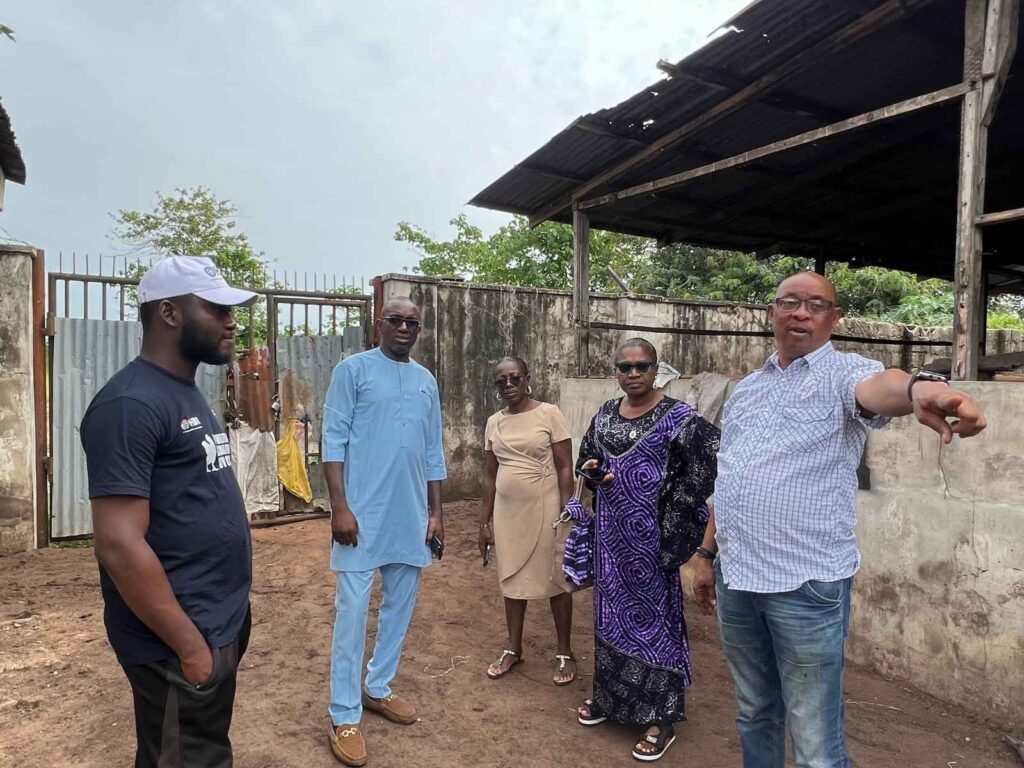
Led by Dr. Nabil Yakubu and Dr. Chizaram Ukauwa of OHDI, the exercise involved consultations with state veterinary officials, an assessment of existing animal health data and reporting systems, and a field visit to an integrated farm.
The SITAN was designed to provide an evidence-informed foundation for developing a comprehensive animal welfare policy and practical guidelines tailored to Imo State’s livestock production systems, veterinary infrastructure, public health priorities and institutional realities.
Understanding Imo State’s Animal Production and Welfare Landscape
Imo State has a diverse animal production sector, with poultry and pig farming playing particularly important roles in food production, household livelihoods and agricultural economic activity. Poultry production is widespread, with deep-litter systems predominating alongside battery-cage production. Pig farming is also economically significant, although recurring disease outbreaks have affected production and farmer confidence.
Small ruminants, particularly goats and sheep, are kept across communities, while cattle are important to livestock trade, markets and slaughter activities. Aquaculture is present but remains relatively small-scale, with opportunities for further development.
Companion animals, particularly dogs, are also common, bringing animal welfare considerations into close connection with responsible ownership, veterinary access and rabies prevention. These varied animal systems present different welfare challenges, requiring a coordinated policy approach that recognizes the needs of individual species while addressing common issues involving animal health, housing, transportation, markets, slaughter, veterinary care and regulatory oversight.
Engaging the State’s Veterinary Leadership
The assessment began with consultations at the Imo State Ministry responsible for Livestock Development and the Department of Veterinary Services. Discussions with the Director of Veterinary Services, Dr. Chika Chukukere, and other veterinary stakeholders provided important insights into the state’s animal health and welfare systems.
One of the most significant concerns identified was the shortage of government-employed veterinarians. At the time of the assessment, the state veterinary leadership reported that only four veterinarians were employed within the state government system, with two primarily performing administrative functions and only two actively involved in field operations.
This was considered particularly concerning given the state’s 27 Local Government Areas and the need for veterinary services across urban, peri-urban and rural communities. The assessment also highlighted limited recruitment of government veterinarians over the years, inadequate field transportation, poorly equipped veterinary facilities and insufficient opportunities for professional training.
Despite these challenges, the Nigerian Veterinary Medical Association (NVMA) in Imo State was described as active, with private veterinary practitioners playing an important role in supporting animal health services and government activities. This professional network represents an important opportunity for strengthening collaboration, expanding veterinary service delivery and supporting future animal welfare initiatives.

Identifying Animal Welfare Challenges Across the Livestock Value Chain
The consultations identified several animal welfare concerns affecting production, transportation, marketing and slaughter.
Poultry welfare emerged as an important priority, particularly in relation to housing conditions and rising prevalence of battery cages, stocking density, biosecurity, disease prevention and the handling and transportation of birds. The assessment also identified concerns regarding live bird markets, including inadequate shelter, poor hygiene and limited access to appropriate watering facilities.
For ruminants, animal transportation and market conditions were significant areas of concern. Reports indicated that cattle and goats are sometimes exposed to prolonged periods under direct sunlight, while overcrowding and poor handling during transportation may contribute to animal stress and injuries.
Slaughter and meat handling systems were also identified as areas requiring urgent attention. State veterinary officials described challenges involving inadequate abattoir infrastructure, informal slaughter practices, limited inspection capacity and poor meat transportation and preservation systems.
An unfinished abattoir development project was highlighted during the consultations, alongside the continued reliance on privately operated slaughter facilities and slabs. These challenges have implications not only for animal welfare but also for food safety, veterinary public health and consumer protection.
Overall, the findings reinforced the importance of developing practical animal welfare standards supported by appropriate infrastructure, professional oversight and effective compliance mechanisms.
Animal Diseases, Veterinary Services and the One Health Connection
Animal health and disease prevention featured prominently during the assessment. State veterinary officials identified several important disease concerns, including Newcastle disease in poultry, African Swine Fever in pigs, Peste des Petits Ruminants in sheep and goats, and rabies in companion animals.
Recurring African Swine Fever outbreaks were reported to have caused substantial losses among pig farmers, while Peste des Petits Ruminants was identified as a significant challenge affecting small ruminant production. Rabies was also highlighted as an important public health concern, with reports of human fatalities and ongoing challenges involving stray dogs and limited vaccination uptake.
These findings demonstrated the close connections between animal welfare, animal health, human health and livelihoods. Animals affected by preventable diseases may experience significant suffering, while disease outbreaks can disrupt production, reduce household income and create wider public health risks. The assessment therefore highlighted the importance of strengthening vaccination programmes, veterinary access, disease surveillance, responsible animal ownership and community awareness as interconnected components of animal welfare improvement.
Assessing Veterinary Data and Disease Surveillance Systems
The OHDI team conducted a more detailed assessment of veterinary data collection, disease surveillance and reporting arrangements. The exercise examined how animal health information is collected, transmitted and used for decision-making across the state.
Imo State has an established reporting structure through which veterinary officers and private practitioners submit disease and vaccination information for compilation by the State Epidemiologist and onward reporting through the Director of Veterinary Services to relevant national systems. However, the assessment identified important limitations in the completeness, coverage and timeliness of available data.
Veterinary reporting remains largely paper-based, with limited digital infrastructure, inadequate field equipment and significant logistical challenges. The shortage of personnel also affects surveillance coverage across the state’s 27 Local Government Areas, with some communities and animal production facilities receiving limited routine assessment.
Farm registration and livestock population records were identified as additional areas requiring strengthening. These gaps make it more difficult to accurately understand animal populations, monitor disease patterns, plan veterinary interventions and identify animal welfare concerns.
Importantly, the consultations revealed institutional interest in adopting digital reporting tools, improving farm registration, strengthening inspection systems and integrating more comprehensive animal health and welfare information into routine government operations. Such improvements could provide a valuable foundation for evidence-based animal welfare governance and more effective veterinary service delivery.
Learning from an Integrated Farm: Practical Approaches to Animal Health and Sustainability
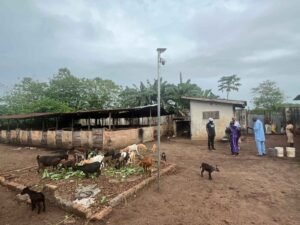
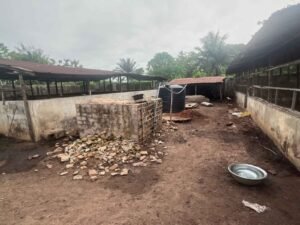
The final day of the assessment included a visit to an integrated farm operated by an animal health technologist, Mr. Chijioke. The farm combined poultry production, small ruminant management and fish farming, with approximately 5,000 fish reportedly present at the time of the visit. The visit provided an opportunity to examine animal housing, feeding, water management, handling practices, biosecurity and environmental sustainability in a practical production setting.
Several positive management practices were observed.
The farm utilized continuous water-flow and partial water-replacement systems in its fish ponds, alongside water recycling and natural filtration approaches. These practices were particularly relevant given the environmental challenges associated with flooding and high water tables in parts of the area. The farm also demonstrated attention to animal handling, environmental management and reducing unnecessary medication use.
Discussions explored the relationship between responsible antimicrobial use, animal health, environmental sustainability and the prevention of antimicrobial resistance. However, the assessment also identified opportunities for improvement, particularly in formal biosecurity procedures, hygiene, structured record-keeping and routine animal health monitoring.
The findings highlighted an important principle: sustainable farming practices and reduced reliance on medication should be accompanied by appropriate veterinary oversight, disease monitoring and timely treatment when animals become ill. The farm visit provided a practical illustration of how animal welfare, environmental management and responsible production can be considered together within a One Health framework.
Building on Existing Strengths and Opportunities
Although the assessment identified significant challenges, it also revealed opportunities for meaningful progress. These included the presence of an active private veterinary community, existing disease reporting arrangements, government interest in policy development and digitalization, and farmers already experimenting with more sustainable production practices.
The assessment identified several priority areas for strengthening animal welfare governance in Imo State:
- Developing a comprehensive, state-specific animal welfare policy and practical guidelines.
- Strengthening veterinary workforce capacity, training and access to animal health services.
- Improving animal welfare during transportation, marketing, handling and slaughter.
- Supporting rehabilitation and improvement of veterinary and slaughter infrastructure.
- Strengthening disease prevention, vaccination and responsible companion animal management.
- Improving farm registration, animal health reporting, digital surveillance and welfare monitoring.
- Promoting farmer education, stakeholder awareness and practical on-farm welfare improvements.
These priorities reflect the need for an approach that combines policy development with institutional strengthening and practical support for animal owners, producers and professionals.
From Situational Analysis to Animal Welfare Policy Development
The findings of the SITAN will inform the next phase of OHDI’s collaboration with Imo State which is the development of a comprehensive animal welfare policy and accompanying implementation frameworks. The proposed policy development process will seek to address the welfare needs of different animal categories while establishing clearer institutional responsibilities, regulatory expectations and pathways for implementation.
Importantly, the assessment demonstrated that strengthening animal welfare in Imo State will require more than developing new policy documents. Progress will also depend on expanding veterinary capacity, improving infrastructure, strengthening data systems, supporting farmers and animal owners, and fostering collaboration among government institutions, veterinary professionals, researchers, producers, businesses and communities.
Advancing Animal Welfare Through One Health and One Welfare
The Imo State Animal Welfare Situational Analysis represents another important step in OHDI’s efforts to support evidence-informed animal welfare reforms across Nigeria. By examining the realities of animal production, veterinary service delivery, disease surveillance, regulation and environmental management, the exercise provided a foundation for developing interventions that respond to the state’s specific needs. The assessment also reinforced the importance of the One Health–One Welfare approach, which recognizes that animal well-being is closely connected to human health, food safety, environmental sustainability and resilient livelihoods.
For Imo State, the journey towards stronger animal welfare governance begins with understanding existing challenges, recognizing institutional strengths and building practical solutions that can improve the lives of animals and the communities that depend on them.
OHDI looks forward to continued engagement with state institutions and stakeholders as the findings are translated into animal welfare policies, guidelines and practical implementation measures.