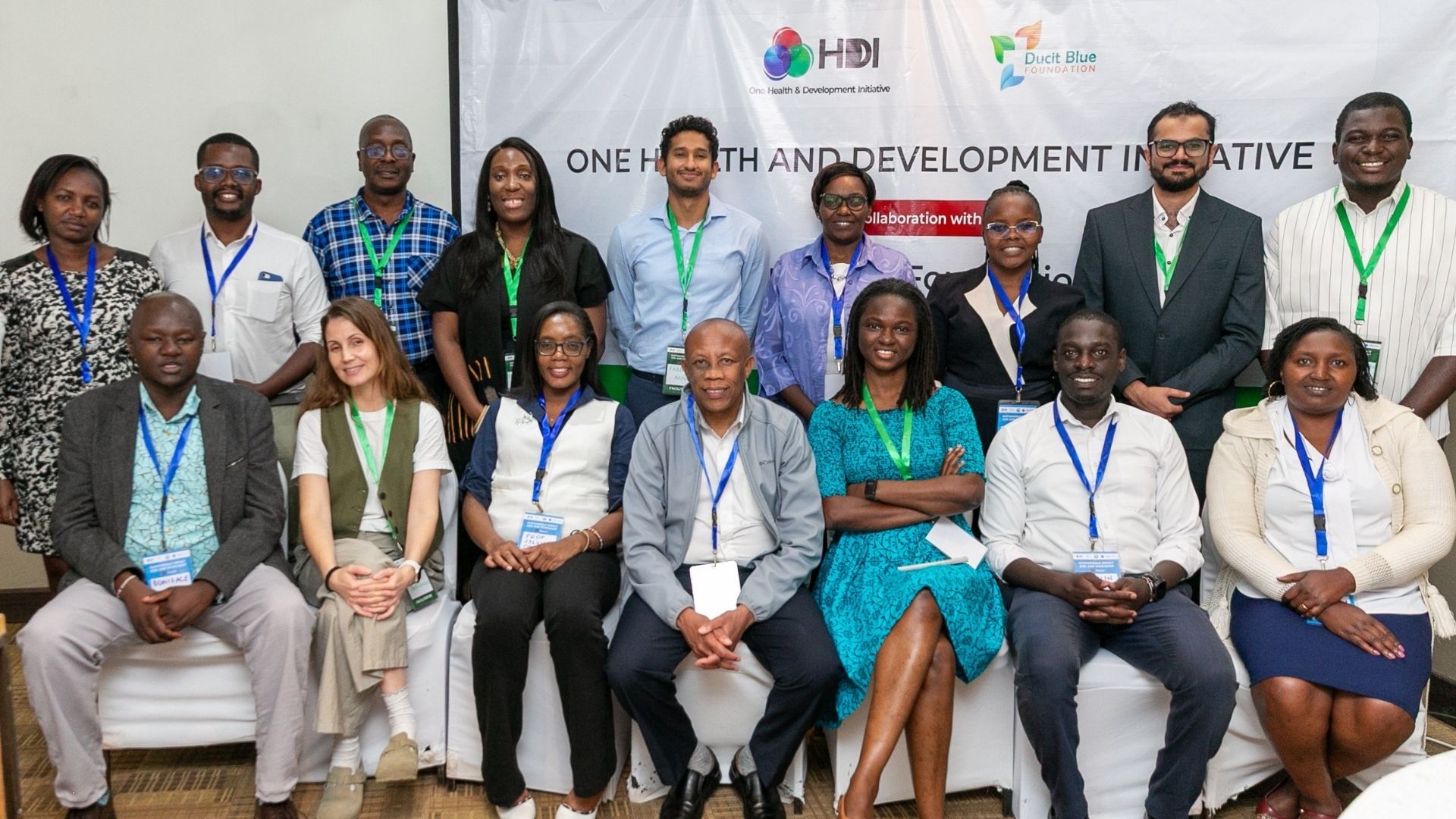
As part of the ICARS Sustainable Impact and AMR project, a key milestone was reached with the Kenya feedback and pilot workshop, which brought together ICARS-supported project teams to test, reflect on, and provide structured feedback on the draft Sustainable Impact Resource Guide and Toolkit. The workshop formed a critical part of the project’s validation phase, moving the work from evidence synthesis and framework development into real-world testing with implementing teams.
Why Kenya?
Kenya was selected as a pilot country for the feedback and testing of the Sustainable Impact Resource Guide and Toolkit because it represents a strong example of a low- and middle-income country actively implementing national and subnational antimicrobial resistance (AMR) interventions within a One Health framework. The country has an established National Action Plan on AMR and functional coordination mechanisms that link policy, research, and implementation across human, animal, and environmental health sectors.
The ICARS-supported project in Kenya is a multi-year implementation research initiative focused on strengthening antimicrobial stewardship in healthcare settings across selected counties. It involves collaboration between national and county-level institutions, academic partners, healthcare facilities, and implementing organizations. This combination of policy alignment, institutional diversity, and real-world implementation makes Kenya a relevant and practical setting to pilot tools designed to support sustainability thinking across the AMR project lifecycle.
Importantly, the Kenyan project team is operating at a stage where questions of continuity, scale, institutionalization, and long-term impact are highly relevant. This made the project well suited for testing whether the draft Resource Guide and Toolkit are clear, applicable, and useful for project teams seeking to embed sustainability considerations into ongoing AMR work. Insights from the Kenya engagement therefore provide valuable learning for refining tools intended for use across diverse AMR contexts globally.
A Collaborative Testing Process
The workshop was designed as a hands-on, participatory learning space, rather than a presentation of finished products. ICARS project teams worked directly with selected sections of the draft Resource Guide and Toolkit, engaging in guided group discussions, facilitated exercises, and plenary reflections.
Participants were invited to navigate the tools as if applying them to their own projects, reflect on clarity, structure, and usability, consider alignment with sustainability thinking and One Health principles, and identify areas where the tools supported decision-making, planning, or reflection. Importantly, the workshop emphasized co-creation over evaluation, creating space for honest discussion, questioning, and adaptation without pressure to produce consensus or final judgments.
Learning Through Application
Rather than focusing on outcomes or scores, the Kenya workshop concentrated on how project teams experience the tools in practice. This included the following:
- How intuitive the tools felt when first introduced
- How well they aligned with existing project workflows
- Whether the structure supported collective discussion and shared understanding
- How sustainability concepts translated into day-to-day project thinking
This approach helped surface practical insights about use, flow, and facilitation, which are essential for ensuring the toolkit is usable beyond pilot settings.
Strengthening Ownership and Relevance
By engaging ICARS-supported teams directly in testing the draft materials, the workshop reinforced a central principle of the project: sustainability frameworks are strongest when shaped with implementers, not just for them.
The Kenya engagement strengthened local ownership of the evolving toolkit and ensured that the final outputs reflect the realities of AMR implementation in LMIC contexts, including institutional complexity, resource constraints, and multisectoral coordination.
What Happens Next?
Insights from the Kenya pilot workshop are being carefully synthesized alongside evidence from systematic reviews, global and regional consultative engagements, survey-based reflections from AMR project teams. Rather than extracting isolated findings, the project team is focused on identifying patterns, tensions, and practical lessons that will inform the next iteration of the Resource Guide and Toolkit.
The Kenya workshop represents an important step in ensuring that the final outputs are not only evidence-based, but also grounded, adaptable, and genuinely useful for AMR projects across diverse contexts.
Further updates will share how lessons from Kenya, and other pilot settings, are shaping the refined Sustainable Impact Resource Guide and Toolkit.