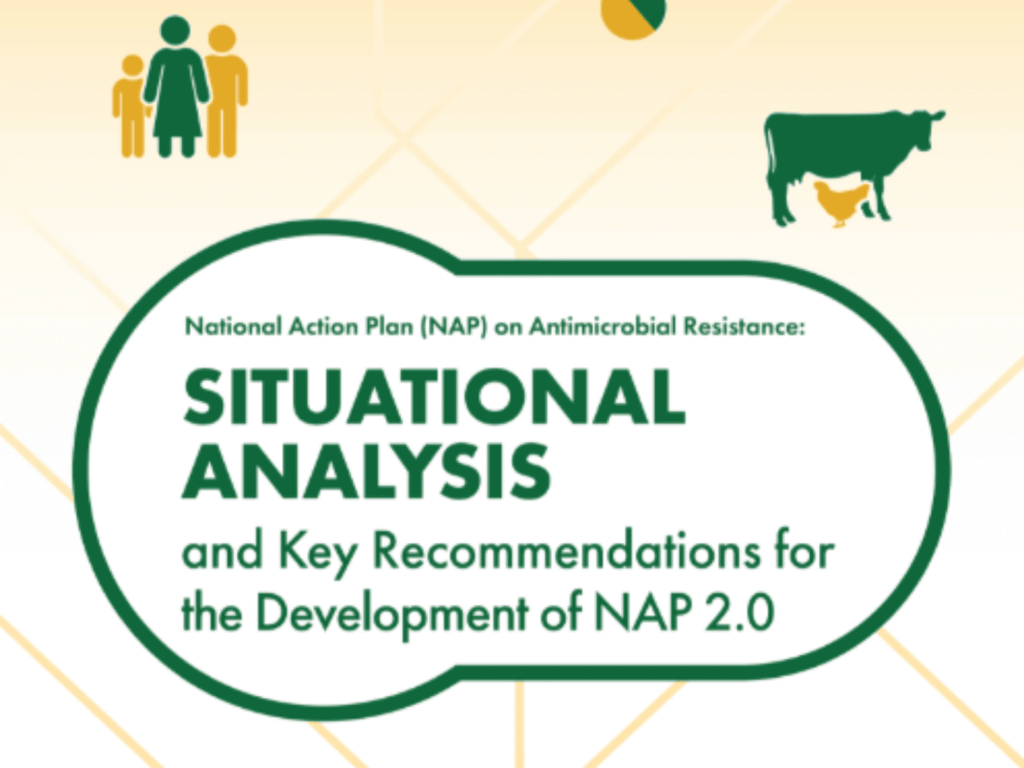
Antimicrobial resistance (AMR) remains one of the most pressing public health and development challenges facing Nigeria. Its drivers cut across human health, animal health, food systems, and the environment, demanding a coordinated and evidence-informed response. Recognising this, the Government of Nigeria undertook a One Health Situational Analysis (SITAN) on AMR to assess progress, identify gaps, and inform the development of Nigeria’s National Action Plan on AMR (NAP) 2.0.
The One Health and Development Initiative (OHDI) was proud to support this critical national process, working alongside government institutions and a wide range of stakeholders to strengthen the evidence base for AMR decision-making in Nigeria.
Why the One Health SITAN on AMR Matters
The One Health SITAN provided a comprehensive, cross-sectoral assessment of Nigeria’s AMR landscape, examining governance structures, surveillance systems, antimicrobial use, infection prevention and control, awareness, access to medicines, and research capacity across human, animal, and environmental health sectors. By synthesising data from policy documents, research studies, surveillance reports, and stakeholder consultations, the SITAN created a shared understanding of where Nigeria stands in its AMR response, and what needs to change.
Importantly, the analysis went beyond documenting challenges. It identified practical, context-specific recommendations to improve coordination, strengthen surveillance, close policy and implementation gaps, and ensure that AMR interventions are realistic, measurable, and sustainable.
OHDI’s Role in the Process
OHDI contributed to the One Health SITAN process with the support of Damilola Adesuyi, Dr. Abdullah Al-awal and Dr. Kikiope Oluwarore drawing from their expertise in AMR research, policy analysis, and One Health systems strengthening. Our support focused on evidence synthesis and policy-relevant analysis across multiple AMR pillars, while ensuring that the situational analysis reflected real-world implementation realities, incorporated diverse stakeholder perspectives, and generated findings that could directly inform national policy and planning. This strengthened alignment between research findings, policy objectives, and operational needs of the Situational Analysis process.
Strengthening Multisectoral Coordination and Learning
A key contribution of the SITAN, and a central focus of OHDI’s work, was highlighting the importance of effective multisectoral coordination under a One Health approach. The analysis underscored progress made through existing governance structures while also identifying gaps in communication, resourcing, and integration across sectors, particularly for environmental AMR and subnational implementation.
By supporting this process, OHDI helped reinforce the value of inclusive stakeholder engagement, shared accountability, and continuous learning as foundations for Nigeria’s AMR response. The SITAN has since served as a critical reference document for national dialogue and planning, including the design of the National Action Plan (NAP) on AMR 2.0.
Looking Ahead
Nigeria’s One Health SITAN on AMR represents a major step forward in grounding AMR policy and action in evidence. OHDI remains committed to supporting the Government Nigeria, and partners as the country moves from analysis to action, through research, policy support, implementation, monitoring, and learning.
As AMR continues to evolve, sustained investment in One Health–aligned, evidence-informed approaches will be essential to protect public health, food systems, livelihoods, and the environment. OHDI is proud to contribute to this collective effort and to support Nigeria’s leadership in advancing a coordinated national response to AMR.