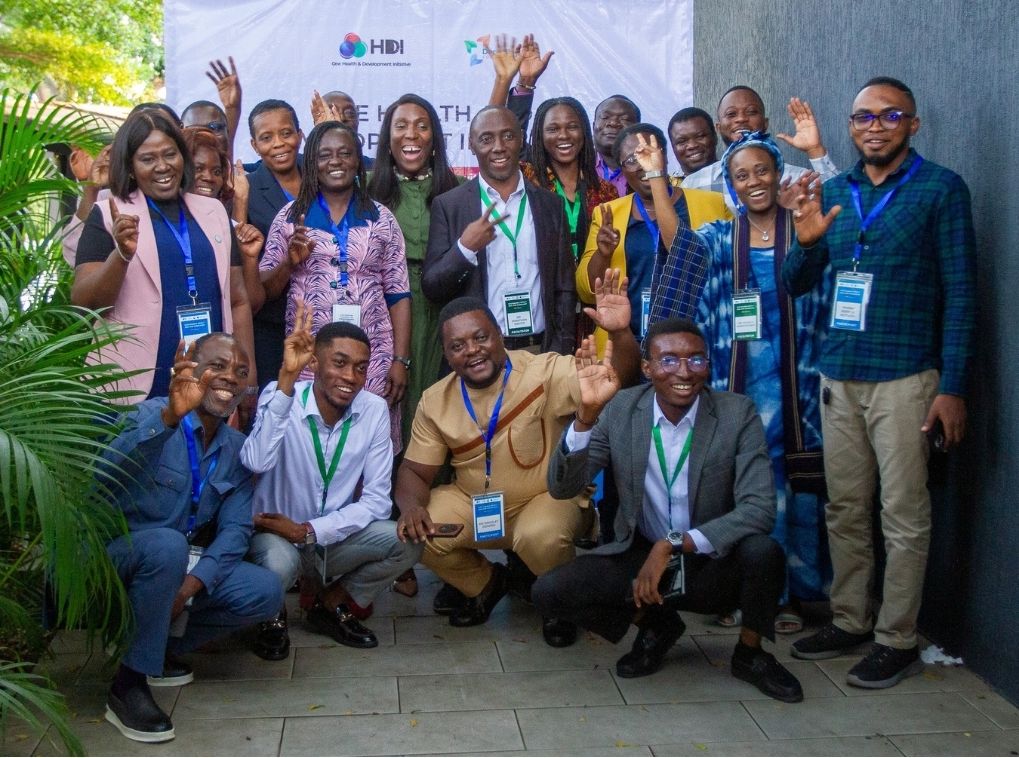
As part of the ICARS Sustainable Impact and AMR Project, Ghana was selected as one of the pilot countries to test and refine the draft Sustainable Impact Resource Guide and Toolkit. In October 2025, a two-day feedback and validation workshop was held in Accra, bringing together the ICARS Ghana project team, national experts, researchers, and implementation partners.
The workshop formed a critical step in ensuring that the draft resource guide and toolkit are not only technically sound, but also practical, relevant, and usable within real AMR project settings in LMICs.
Why Ghana?
Ghana was selected as a pilot country for the Sustainable Impact Resource Guide and Toolkit because it offers a strong and representative environment for testing sustainability-focused approaches to antimicrobial resistance (AMR) interventions in low- and middle-income settings.
The country has demonstrated long-standing political and technical commitment to addressing AMR, including the development and implementation of national AMR strategies, engagement across human, animal, and environmental health sectors, and active participation in global and regional AMR initiatives. This multisectoral foundation makes Ghana a particularly relevant context for examining how sustainability principles can be embedded across different institutions and levels of the health system.
Importantly, Ghana hosts an active ICARS-supported AMR project that spans policy engagement, health service delivery, and systems strengthening. The project involves collaboration between government institutions, research partners, and implementation teams, providing a practical setting in which to test sustainability tools across planning, implementation, monitoring, and transition phases of the project lifecycle.
Ghana was also selected because of the diversity of actors involved in AMR work, including ministries, academic institutions, healthcare facilities, and development partners. This diversity enabled rich, multi-perspective engagement during the workshop and allowed the toolkit to be examined from different institutional and operational vantage points.
Finally, the Ghana project team’s willingness to engage critically with draft tools to assess what works and to challenge assumptions and suggest improvements, made the country an ideal learning partner. The feedback process was approached as a collaborative exercise, ensuring that the evolving Resource Guide and Toolkit remain grounded in real-world implementation realities and adaptable to varying national contexts.
A Practical, Hands-On Validation Process
Rather than presenting the toolkit as a finished product, the workshop was designed as a co-creation and learning space. Participants worked directly with the draft tools, applying them to their ongoing project activities and reflecting on how well the tools supported sustainability thinking across planning, implementation, monitoring, and transition.
Through structured group work and plenary discussions, participants explored how sustainability concepts such as institutionalisation, leadership, financing, capacity building, risk management, and monitoring could be better integrated into AMR projects as a core part of project design and delivery.
Focusing on Usability, Not Just Theory
A key strength of the Ghana workshop was its emphasis on usability and real-world application. Participants were encouraged to critically examine the clarity of the tools, the logic of the framework, and how easily the guidance could be adapted to their institutional and national context.
This process allowed the project team to gather rich insights on how sustainability tools function in practice, including what prompts meaningful reflection, what may need simplification, and how guidance can better support teams working at different stages of the project lifecycle.
Strengthening Ownership and Learning
Beyond technical feedback, the workshop also helped strengthen local ownership of the Sustainable Impact framework. By engaging implementers, policymakers, researchers, and monitoring experts together, the process reinforced sustainability as a shared responsibility, rather than a requirement driven solely by donors or external actors.
Participants also highlighted the value of having a structured framework that helps make existing sustainability efforts more visible and intentional, while identifying gaps that can be addressed over time.
Informing the Next Phase
Insights from the Ghana pilot workshop will be used alongside feedback from Kenya, literature reviews, and global surveys to further refine the Sustainable Impact Resource Guide and Toolkit. The focus remains on producing guidance that is evidence-informed, adaptable, and grounded in the realities of AMR project implementation.
As the project moves toward finalisation, lessons from Ghana will play an important role in shaping tools that support AMR initiatives to move beyond short-term project outputs toward lasting systems change.