Food safety is often discussed at the point of consumption, what people eat, how it is prepared, and how it is handled in homes and markets. But the real story begins much earlier, at the source of food production itself. And for animal-source foods, that source is the abattoir.
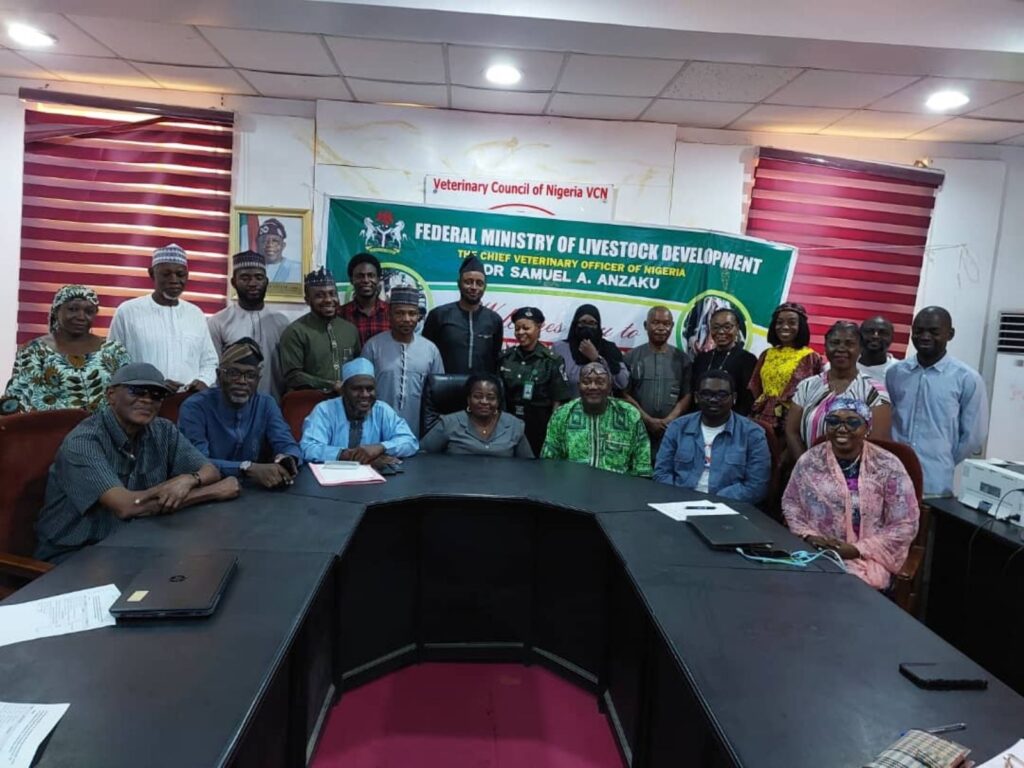
In December 2025, the One Health and Development Initiative (OHDI) participated in a national validation workshop convened by the Federal Ministry of Livestock Development to review the Standard Operating Procedures (SOP) and Guidelines for Abattoirs and Slaughterhouses. The meeting brought together regulators, public health experts, environmental agencies, and abattoir operators to refine what is set to become a critical national framework for meat safety in Nigeria. This was more than a technical review. It was a necessary step toward addressing one of the most overlooked but consequential links in the food system.
Why Abattoirs Matter for Public Health
Abattoirs sit at the intersection of animal health, food safety, and environmental management. What happens in these spaces directly affects the quality of meat consumed by millions of people, as well as the risk of zoonotic and food-borne diseases. Yet across many parts of Nigeria, slaughter facilities operate under inconsistent conditions. Gaps in hygiene practices, weak enforcement of standards, and inadequate infrastructure continue to create risks, not only for consumers, but also for workers and surrounding communities.
Improving food systems, therefore, is not just about increasing production or access. It is about strengthening how food is handled, processed, and regulated at every stage.
From Guidelines to Practical Systems
The SOP and guidelines under review are intended to provide a national structure for how abattoirs should operate, from hygiene and sanitation protocols to inspection procedures and regulatory oversight. What made the validation workshop particularly important was the deliberate effort to ground these guidelines in reality.
Participants did not engage with the document as a theoretical framework. Instead, they interrogated it through the lens of experience, drawing from the day-to-day operations of abattoirs such as Karu, Kubwa, Deidei, and Gwagwalada.
This mattered, because for any national guideline to be effective, it must be both technically sound and practically implementable. The discussions moved beyond what should be done, to how it can realistically be done within existing systems, and what needs to change for it to work.
A One Health Lens on Food Systems
OHDI’s contribution to the workshop emphasized a simple but often underappreciated point: food safety cannot be addressed in isolation. Safe meat production depends on healthy animals, hygienic slaughter processes, environmental management of waste and by-products, effective inspection and regulation, and functional surveillance systems
These elements are interconnected, and weaknesses in any one of them can compromise the entire system. This is where the One Health approach becomes essential, not as a concept, but as a practical framework for coordination across veterinary, public health, and environmental systems.
Connecting Food Safety to Surveillance and Early Detection
One of the critical gaps highlighted during the discussions was the need to strengthen surveillance within slaughter systems. Abattoirs are not just processing sites; they are also important points for detecting disease signals, from visible lesions in animals to patterns that may indicate emerging health threats. When properly structured, these systems can contribute to early warning and prevention, not just food safety compliance.
This is where broader system approaches, such as community-based and facility-linked surveillance models, become relevant. Strengthening detection and reporting at points like abattoirs complements ongoing efforts to improve early warning and response across the health system.
Towards Standardization and Accountability
The validation process marked an important step toward standardizing operations across abattoirs in Nigeria. Beyond the technical content of the SOP, the workshop helped build something equally important, shared ownership among stakeholders.
Regulators, operators, and practitioners were all part of the process, contributing insights and identifying areas for refinement. This kind of engagement increases the likelihood that the final guidelines will not only be adopted, but also implemented effectively.
What This Means for Responsible and Sustainable Food Systems
Food systems cannot be considered sustainable if they compromise health, whether through unsafe practices, environmental degradation, or disease risks. Strengthening abattoir operations is therefore not just a regulatory exercise. It is a foundational step toward protecting public health, reducing food-borne disease risks, improving animal welfare practices, ensuring environmental safety, and building trust in food systems.
The next phase will involve refining the SOP based on stakeholder input and moving toward national adoption and implementation. But the real test will not be in the document itself, it will be in how these standards are applied, monitored, and sustained across the country.
For OHDI, this engagement reinforces an ongoing commitment to strengthening food systems through integrated approaches that connect policy, practice, and surveillance. Because safe food does not begin at the table. It begins at the source.