Antimicrobial resistance (AMR) is often described as a silent pandemic, but in many Nigerian communities, its roots are anything but silent. Poor water, sanitation, and hygiene (WASH) practices continue to fuel infections, increase antibiotic misuse, and accelerate the spread of drug-resistant pathogens.
Under the Youth for AMR Risk Communication and Action (YARC) initiative, implemented by One Health and Development Initiative (OHDI), the WASH Off AMR campaign set out to tackle this challenge head-on, by empowering young people to lead change where it matters most: in schools and communities.
Why WASH Matters in the AMR Fight
Inadequate hygiene and sanitation increase infections, which in turn drive unnecessary and inappropriate antibiotic use. WASH is therefore not just a public health issue, it is a frontline AMR prevention strategy. Yet AMR and WASH education remains limited in many secondary schools across Nigeria. WASH Off AMR was designed to close this gap through youth-led risk communication, practical behaviour change interventions, and long-term school-based engagement.
Training Youth to Become AMR Risk Communicators
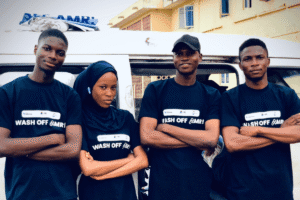
At the heart of the campaign was a train-the-trainer model. Youth leaders from university AMR clubs across Nigeria were selected and trained using a robust curriculum co-developed with expert consultants. Over twelve interactive training sessions, participants built skills in Antimicrobial resistance and stewardship, WASH and infection prevention, Risk communication and social behaviour change, Community engagement and school scoping, and Media use with storytelling. Now after the training exercise, these champions didn’t stop at learning, they became educators, advocates, and mentors.
From Classrooms to Communities
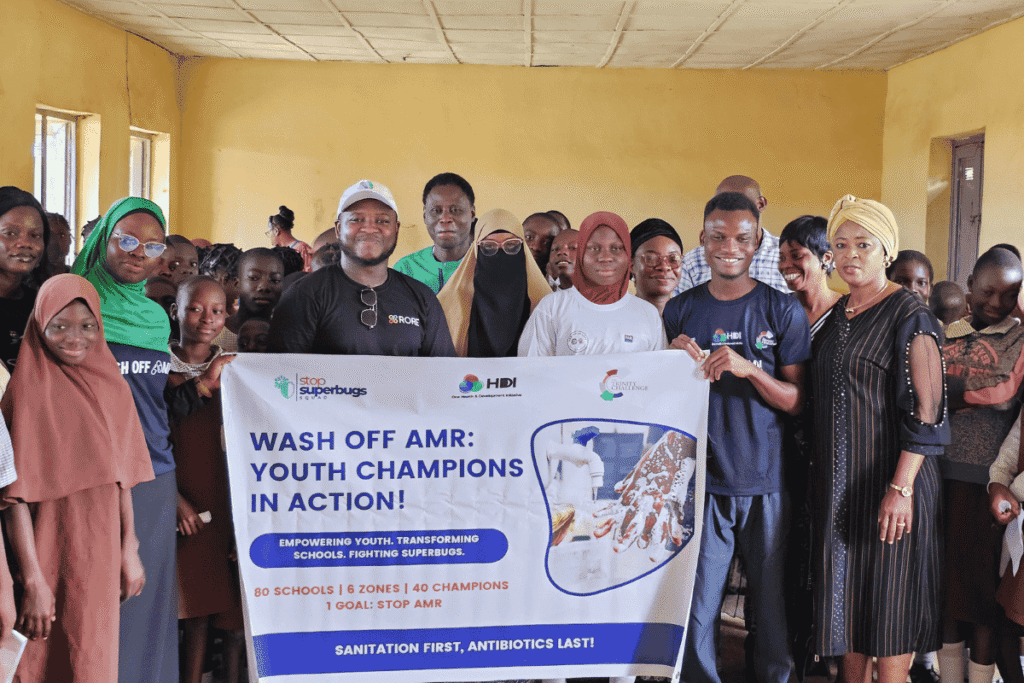
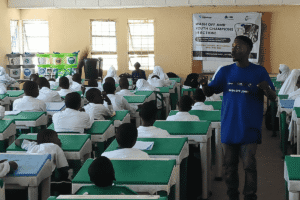
Armed with new skills, the youth champions visited secondary schools across all six geopolitical zones of Nigeria. Before delivering sessions, they worked with school authorities to conduct scoping exercises, identifying gaps in AMR and WASH knowledge, existing hygiene practices, and infrastructure challenges limiting safe behaviours
The insights from this process directly shaped the campaign’s communication materials, ensuring they were context-specific, practical, and relatable. To further expand reach, materials were translated into Pidgin and Hausa, making AMR education more accessible.
Turning Knowledge into Action
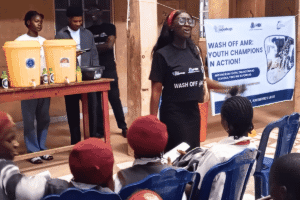
Education alone is not enough to change behaviour. To support real-world practice, the campaign paired learning with action by donating essential WASH materials to schools. These included buckets and handwashing stations, liquid soap, detergents, waste bins and cleaning tools
In many schools, these were the first functional handwashing facilities students had access to, instantly removing barriers to good hygiene.
Building Sustainability Through School AMR Clubs
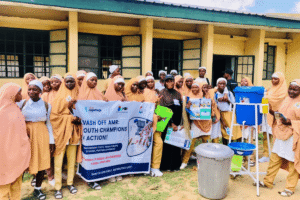
One of the campaign’s most powerful outcomes was the establishment of 66 functional WASH Off AMR clubs in secondary schools nationwide. Each club now serves as a hub for peer-to-peer learning, continuous AMR and WASH education, student leadership and advocacy.
With over 1,700 student members, these clubs are nurturing the next generation of AMR stewards, ensuring the work continues long after the campaign ends.
Impact at a Glance
Through WASH Off AMR, YARC achieved remarkable reach and depth:
- 31,565 students educated on AMR and WASH
- 79 secondary schools reached across 18 states
- 439 teachers and parents engaged
- 38 youth champions trained, who further trained 163 additional youths
- Observable behaviour change, including reported up to 90% compliance with handwashing routines in some schools
Teachers and school leaders repeatedly highlighted how practical, interactive, and engaging the sessions were, many noting it was students’ first exposure to AMR education.
Small Moments, Big Shifts
Some of the most memorable impacts came from simple innovations. In one school, a youth champion introduced a handwashing competition, complete with gold, silver, and bronze medals. What started as a game became a powerful learning moment where students mastered proper handwashing techniques and proudly demonstrated them long after the session ended.
As one student put it: “The games made learning easy. I’ll never forget what AMR means now.”
Looking Ahead
WASH Off AMR is a foundation for strengthened advocacy and action in AMR interventions, leverage the power of youth and movement building and extensive One Health Impact. Therefore, building on this success, OHDI plans to proceed with the following follow-up actions:
- Strengthen links between secondary school AMR clubs and university AMR networks
- Develop an open-access online course to train more youth AMR risk communicators
- Use campaign evidence to advocate for improved WASH infrastructure in schools
- Support efforts to integrate AMR education into school curricula
Through YARC and WASH Off AMR, Nigerian youth are proving that when knowledge, tools, and trust come together, meaningful change is possible – one handwash, one conversation, and one young leader at a time.