In many conversations about health security, the focus often stays on outbreaks, vaccines, and response systems. But beneath all of that lies something just as critical, and often less visible: how we detect and respond to environmental risks before they become public health crises.
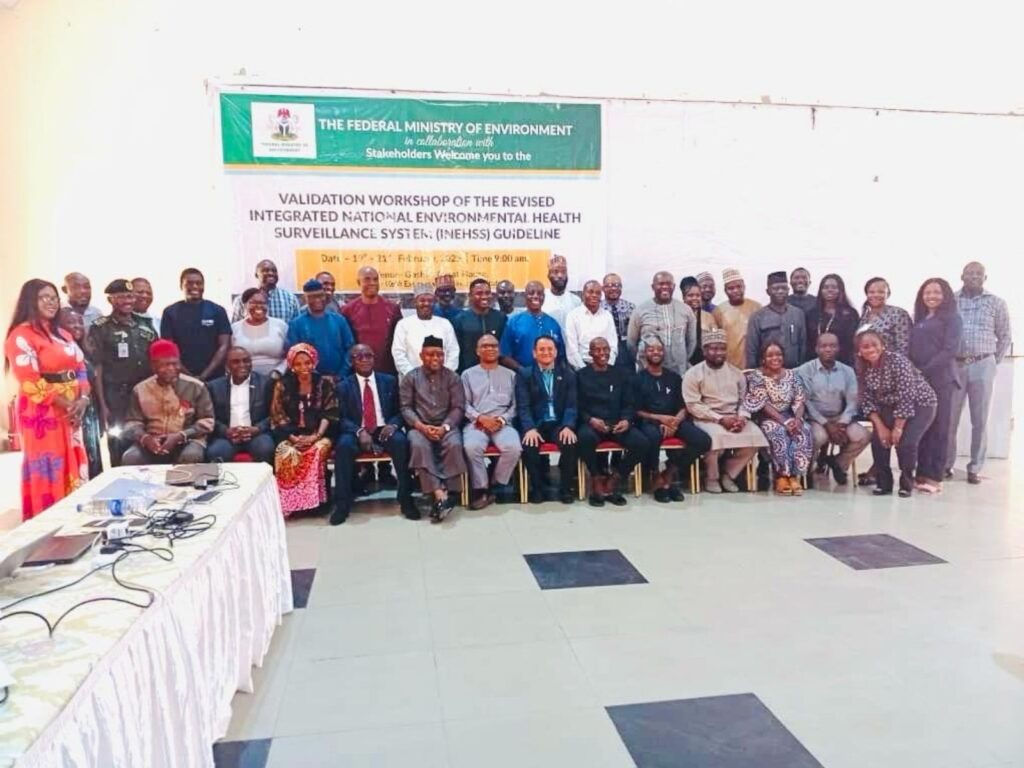
This was the focus of the Integrated National Environmental Health Surveillance System (INEHSS) Validation Workshop, held from February 19 to 21, 2024, along the Abuja-Keffi corridor. The three-day engagement brought together a wide range of stakeholders across government, academia, and development organizations to refine what could become a cornerstone of Nigeria’s environmental health surveillance architecture.
At its core, INEHSS is designed to do something both simple and ambitious: create a structured, coordinated system for identifying, monitoring, and responding to environmental health risks—from air and water pollution to food safety, climate-related hazards, and chemical exposures.
For OHDI, participation in this process reflects a broader commitment to strengthening health security not just through disease response, but through systems that detect risks early and act before harm occurs.
Building a System That Works Across Sectors
One of the strongest aspects of the validation workshop was the diversity of voices in the room. Representatives from multiple federal ministries, including Environment, Health, Agriculture, and Livestock, worked alongside institutions such as the Nigeria Centre for Disease Control and Prevention, the UK Health Security Agency, and regulatory bodies like NESREA (National Environmental Standards and Regulations Enforcement Agency).
This kind of multi-sector engagement is not just important, it is essential.
Environmental health risks do not operate in silos. Air quality, food systems, water safety, and climate impacts intersect continuously with human and animal health. Any system designed to monitor and respond to these risks must therefore reflect that complexity.
INEHSS is built on this principle, embedding collaboration at its core.
From Draft to Direction
The purpose of the workshop was not simply to review a document, but to strengthen it, to interrogate its assumptions, identify its gaps, and ensure that it is both practical and aligned with national and global best practices. Participants worked through the draft in a structured way, breaking into groups to examine existing sections while also developing the foundation for areas that had yet to be fully articulated.
What emerged from these discussions was not just feedback, but direction.
There was a clear recognition that for the system to be effective, it must be grounded in reliable data, clear definitions, and a shared understanding of key concepts. Without this, even the most well-designed frameworks risk becoming difficult to implement.
There was also a strong push to ensure that the system reflects emerging realities. Issues such as antimicrobial resistance, climate-related risks, and evolving environmental hazards cannot be treated as peripheral, but they must be central to how surveillance is designed and implemented.
Designing for Early Warning and Response
A defining feature of INEHSS is its emphasis on early warning.
The framework is not only about monitoring environmental conditions but about translating those signals into action which include identifying hazards, confirming risks, communicating effectively, and responding in a timely manner.
This was reflected in the structure proposed for the remaining sections of the document, which place strong emphasis on investigation, preparedness, risk communication, and long-term sustainability.
Importantly, there is also a forward-looking component: the transition toward a more digitized, electronic surveillance system. This signals a recognition that modern surveillance must be data-driven, responsive, and capable of integrating information across sectors in real time.
Why This Matters for Health Security
Environmental health is often treated as a separate domain, but in reality, it sits at the heart of health security.
Outbreaks do not happen in isolation. They are often triggered or amplified by environmental conditions, such as changes in climate, disruptions in ecosystems, unsafe food systems, or exposure to hazardous substances. Strengthening environmental health surveillance, therefore, is not just about compliance or regulation. It is about prevention.
It is about identifying risks early enough to act, reducing exposure, and ultimately preventing disease before it spreads.
OHDI’s Role in the Bigger Picture
For OHDI, engagement in the INEHSS validation process is part of a broader effort to support integrated, One Health-driven systems that connect data, communities, and decision-making. Whether through community-based initiatives, surveillance strengthening, or digital tools, the goal remains the same: to bridge gaps between where risks emerge and where action is taken.
INEHSS represents an opportunity to do this at a national scale.
Looking Ahead
The validation workshop marked an important step but it is only one part of a longer process.
The next phase will involve refining the document, incorporating feedback, and moving toward implementation. This will require sustained collaboration, resource commitment, and continued engagement across sectors.
If successfully operationalized, INEHSS has the potential to significantly strengthen Nigeria’s ability to monitor environmental health risks and respond proactively. And in a world where health threats are becoming increasingly complex and interconnected, that kind of system is not just valuable – it is necessary.