Access to quality animal healthcare remains an important challenge for many livestock farmers, particularly those in rural and underserved communities. Limited access to veterinary professionals, preventive healthcare services and reliable animal health information can contribute to preventable animal diseases, poor welfare outcomes, production losses and reduced household incomes.
Strengthening the capacity of frontline animal health service providers, including veterinary paraprofessionals (VPPs), presents an important opportunity to address these challenges while supporting sustainable livestock production, rural livelihoods and stronger animal health systems.
On 5 November 2026, the One Health and Development Initiative (OHDI) participated in the Food and Agriculture Organization of the United Nations (FAO) event titled “Empowering Veterinary Paraprofessional Entrepreneurs: Celebrating Results, Inspiring Action,” held at the United Nations House in Abuja, Nigeria.
The event brought together government institutions, professional and regulatory bodies, veterinary training institutions, veterinary paraprofessionals and other animal health stakeholders to celebrate the achievements of FAO’s VPP empowerment programme and explore opportunities for sustaining and expanding its impact.
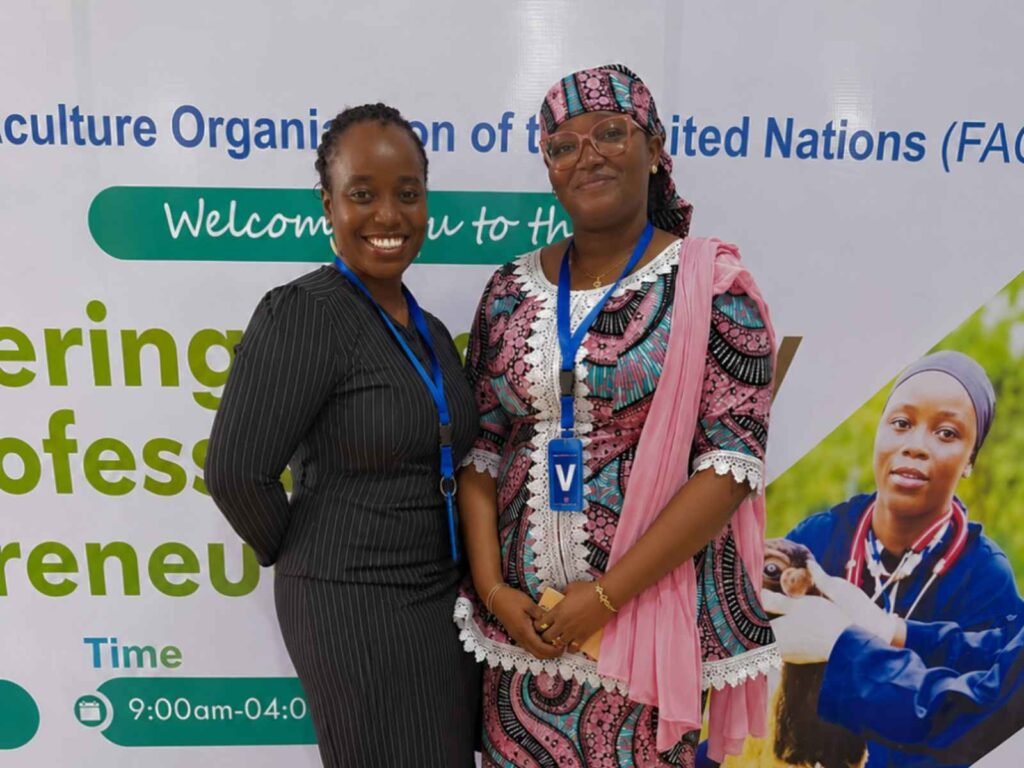
OHDI was represented by Dr. Bashirat Idris, Program and Communications Coordinator, and Dr. Titilayo Ayodele, Communications Intern.
Bringing Preventive Animal Healthcare Closer to Farming Communities
Implemented between 2021 and 2026 with support from the Gates Foundation, FAO’s veterinary paraprofessional empowerment programme sought to improve livestock farmers’ access to quality, gender-responsive and preventive animal healthcare through competent, entrepreneurial and professionally recognised veterinary paraprofessionals.
Veterinary paraprofessionals play an important role in complementing the work of veterinarians, particularly in communities where access to veterinary services is limited. Working within their authorised scope of practice and appropriate veterinary oversight, they can support preventive healthcare, farmer education, disease reporting, vaccination, livestock management and referrals to veterinarians. Their proximity to livestock farmers also positions them to influence everyday animal management practices, encourage early identification of disease and welfare concerns, and promote the adoption of responsible and sustainable production practices.
Recognising this potential, FAO’s programme adopted a comprehensive approach that extended beyond conventional technical training to include:
- Technical capacity development in preventive livestock healthcare.
- Entrepreneurship, business planning and financial management.
- Mentorship and ongoing professional support.
- Professional recognition and regulatory compliance.
- Institutional strengthening and sustainable training delivery.
- Improved access to veterinary inputs, finance, markets and business opportunities.
By combining these interventions, the programme sought to strengthen both the availability of frontline animal healthcare services and the economic sustainability of the professionals providing them.
Celebrating Measurable Results and Impact
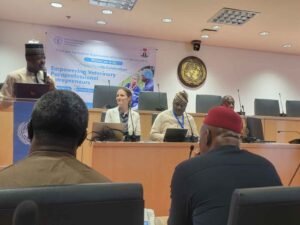
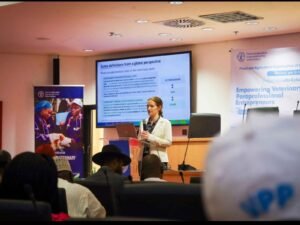
A major highlight of the event was the presentation of programme achievements and beneficiary experiences, demonstrating the potential of veterinary paraprofessional empowerment to improve animal healthcare delivery, enterprise development and livestock farmers’ livelihoods.
Among the key results reported by FAO were:
- 249 veterinary paraprofessionals trained, with women accounting for 43% of participants.
- 33,000 person-hours of learning delivered through capacity-development activities.
- 65 mentors trained and engaged to provide ongoing professional and business support.
- A 53% increase in average business income among Phase I VPPs within one year of completing their training.
- More than 90% of surveyed farmers reporting greater satisfaction with VPP services and improved farm performance.
- 3 partner training institutions strengthened, all independently delivering further continuing professional development courses.
- 3 locally led multistakeholder platforms established to connect VPPs with farmers, government veterinary services and other relevant stakeholders.
- Increased adoption of preventive animal healthcare practices, particularly vaccination, among farmers served by trained VPPs.
These reported achievements highlight the value of investing in approaches that simultaneously address professional capacity, access to animal healthcare, business sustainability, gender inclusion and institutional development.
Beyond Technical Training: Building Sustainable Animal Health Enterprises
One of the most compelling aspects of the programme was its recognition that technical competence alone may not be sufficient to sustain frontline animal healthcare services. Veterinary paraprofessionals also require business management skills, access to resources, professional networks and viable service delivery models to establish and maintain enterprises that can respond to the needs of livestock farmers.
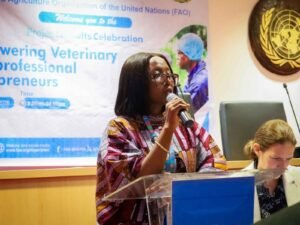
Beneficiary testimonies presented during the event illustrated how the combination of technical training, mentorship and entrepreneurship support had translated into practical improvements in animal health service delivery. One beneficiary shared how training in business planning, financial management and preventive livestock healthcare helped him transform his existing business, increase his earnings, expand his operations and employ additional veterinary paraprofessionals. Another beneficiary, a female veterinary paraprofessional, demonstrated how mobile animal healthcare services, vaccination, deworming, herd health planning and the sale of animal health supplies could be integrated into a sustainable business model. Through the programme, she strengthened her technical and business management competencies while developing stronger relationships with livestock farmers.
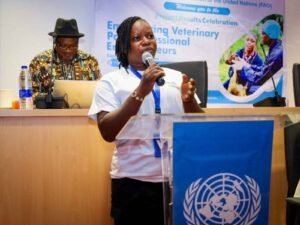
These experiences demonstrate how entrepreneurship can serve as an important enabler of accessible and sustainable animal healthcare. Supporting frontline animal health professionals to develop viable enterprises can help expand service availability, create employment opportunities, strengthen local economies and reduce dependence on short-term interventions.
Strengthening Professional Recognition and Continuing Professional Development
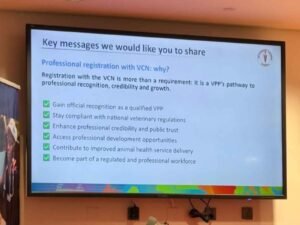
Sustaining the impact of capacity-development programmes requires functional professional, regulatory and institutional structures that support continuous learning and quality service delivery. As part of the event, FAO, in partnership with the Veterinary Council of Nigeria (VCN), convened an afternoon workshop focused on “Advancing Veterinary Paraprofessional Registration and Access to Continuing Professional Development (CPD).”
The workshop addressed important issues relating to professional recognition, VPP registration, regulatory oversight, CPD provider registration and the role of training institutions in sustaining professional capacity development.
Stakeholders also participated in group discussions centred on two important questions:
- What types of continuing professional development are needed by veterinary paraprofessionals?
- How can continuing professional development opportunities be made available to veterinary paraprofessionals sustainably?
These discussions reinforced the importance of creating structured pathways through which VPPs can continuously update their knowledge, strengthen their competencies and remain connected to appropriate professional and regulatory institutions. The programme’s investment in existing training institutions, including improvements in infrastructure, equipment, trainer capacity and practical learning resources, also provides an important model for sustaining professional development beyond the lifespan of individual donor-funded projects.
Integrating Animal Welfare into Frontline Animal Healthcare
From OHDI’s perspective, an important opportunity emerging from the engagement is the potential to strengthen the integration of animal welfare principles and practices into veterinary paraprofessional training and continuing professional development.
Animal health and animal welfare are intrinsically connected. Preventive animal healthcare should extend beyond disease prevention and treatment to encompass the broader conditions that influence animals’ physical health, behaviour, comfort and overall well-being. Given their direct interactions with livestock farmers, veterinary paraprofessionals are strategically positioned to promote improved animal welfare practices at the farm and community levels.
Strengthening animal welfare competencies among frontline animal health service providers could include:
- Understanding fundamental animal welfare principles and assessment frameworks.
- Recognising early indicators of poor animal health and welfare.
- Promoting humane animal handling, restraint and transportation.
- Supporting appropriate housing, nutrition, water provision and environmental management.
- Identifying and addressing preventable sources of pain, injury, stress and discomfort.
- Promoting responsible antimicrobial use, biosecurity and preventive healthcare.
- Advising farmers on species-specific welfare requirements and responsible livestock management practices.
Integrating these competencies into existing training curricula and recognised professional development programmes could help ensure that animal welfare becomes an integral component of routine animal healthcare and livestock management. This approach could also strengthen the practical implementation of animal welfare policies, standards and guidelines by equipping frontline professionals with the knowledge and skills needed to support farmers in adopting improved practices.
Veterinary Paraprofessionals as Enablers of One Health
The role of veterinary paraprofessionals extends beyond individual animal healthcare and livestock productivity. As frontline service providers, they can contribute to broader One Health objectives by supporting disease surveillance and reporting, preventive healthcare, responsible antimicrobial use, farmer education, food safety and sustainable livestock management.
Their regular engagement with farming communities also creates opportunities to strengthen community-level disease prevention and early detection, particularly when their activities are effectively connected to formal veterinary services and surveillance systems.
Recognising and strengthening this role can contribute to more responsive animal health systems, improved animal welfare, reduced disease risks and greater resilience among livestock-dependent communities.
Achieving these outcomes requires continued collaboration among veterinarians, veterinary paraprofessionals, government institutions, professional and regulatory bodies, training institutions, civil society organisations and livestock farmers.
OHDI’s Commitment to Strengthening Animal Health, Welfare and Sustainable Livestock Systems
The FAO veterinary paraprofessional empowerment programme aligns closely with OHDI’s broader commitment to strengthening animal health and welfare, promoting preventive healthcare, building professional capacity and advancing responsible and sustainable food systems through One Health.
Through our animal welfare and sustainable livestock initiatives, including the Africa Fish and Aquaculture Welfare (AFIWEL) program and Poultry Welfare and Sustainable Systems (POWELS) Program, OHDI continues to work towards improving animal management practices, strengthening professional and institutional capacities, and supporting farmers in adopting more responsible and sustainable production systems.
We recognise the importance of reaching farmers through the professionals and service providers who regularly engage with them. Strengthening these professionals’ competencies in animal health, welfare and sustainable production can help bridge the gap between policy, technical knowledge and practical implementation at the farm level.
OHDI commends FAO, the Gates Foundation, the Veterinary Council of Nigeria, participating training institutions and other stakeholders for their contributions to strengthening veterinary paraprofessional capacity and improving access to preventive livestock healthcare in Nigeria. Looking ahead, OHDI is interested in exploring complementary opportunities to strengthen animal welfare education, practical welfare assessment and responsible livestock management within existing veterinary training and continuing professional development structures.
Investing in frontline animal health professionals is an investment in healthier animals, empowered farmers, stronger rural economies and more resilient and sustainable food systems.