As we ease into a new year of action and strategic period (2026 – 2030), we are taking a deliberate moment to examine what meaningful youth engagement in antimicrobial resistance (AMR) mitigation and prevention truly represents, beyond rhetoric, symbolic participation, and one-off awareness campaigns.
Across global health conversations, “youth engagement” is frequently cited as essential to the AMR response. Yet in practice, young people are too often invited into meetings and campaigns without real influence over agendas, communication strategies, or follow-up actions. This creates visibility without power, and limits the long-term effectiveness of AMR interventions.
At One Health and Development Initiative, we believe the future of AMR action depends on moving decisively beyond this model.
Why Youth Matter to the Future of AMR
A sustained and effective AMR response depends on today’s youth. They are tomorrow’s prescribers, farmers, consumers, policymakers, scientists, innovators, and communicators. The choices they will make, about antimicrobial use, stewardship, food production, healthcare delivery, public policy, and more – will shape the trajectory of antimicrobial effectiveness for decades to come. If young people are expected to make informed decisions in the future, then their skills, confidence, and technical understanding must be developed now. Youth engagement must therefore be intentional, structured, and adequately resourced, not incidental.
From Symbolic Participation to Meaningful Influence
At OHDI, meaningful youth engagement in AMR requires three foundational commitments: capacity strengthening and mentorship, co-creation, and resource mobilisation.
Young people must be supported to identify communication gaps within their own communities and co-design messages that resonate culturally, linguistically, and socially. They need structured training, mentorship, and clear leadership pathways that allow them to grow from participants into practitioners and advocates. Crucially, youth-led work must be backed by real resources – material, financial, technical, and institutional, because engagement cannot be sustained on passion alone.
This philosophy underpins the global Youth for AMR Risk Communication and Action (YARC) project.
YARC: Building a System, Not a Campaign
YARC is a global youth-focused initiative strengthening AMR education, risk communication, advocacy and action across communities in low- and middle-income countries (LMICs), where the burden of AMR is disproportionately high. Rather than treating youth engagement as an event-based activity, YARC is intentionally designed as a long-term system for youth leadership in AMR and One Health action.
At the centre of this system is the formalisation of a structured train-the-trainer model. Through this approach, cohorts of trained AMR youth advocates are supported to mentor, train, and mobilise new groups of young people across schools, communities, professional spaces, and policy environments. This creates continuity, institutional memory, and local ownership, while allowing AMR knowledge and stewardship practices to spread organically and contextually.
To further support scale and accessibility, we are expanding YARC’s training architecture through a dedicated online learning platform. This platform will enable young people across diverse geographies to access standardised training modules on AMR, water, sanitation and hygiene (WASH), risk communication, and One Health. By combining digital learning with in-person community action, this blended model allows us to reach more youths while maintaining quality, accountability, and relevance.
Mobilising Resources Where AMR Risks Are Highest
Equally important to our work is resource mobilisation for action. Meaningful youth engagement cannot be sustained without deliberate investment. We are actively mobilising resources to equip youth advocates working in schools, informal settlements, rural communities, healthcare settings, and agricultural systems, particularly in contexts where AMR risks intersect with poverty, weak WASH infrastructure, limited access to information, and fragile health systems.
Our approach recognises that youth advocates operating in these spaces are not merely raising awareness; they are responding to real-world drivers of AMR and supporting behaviour change at the community level.
Expanding Beyond Nigeria, Grounded in Experience
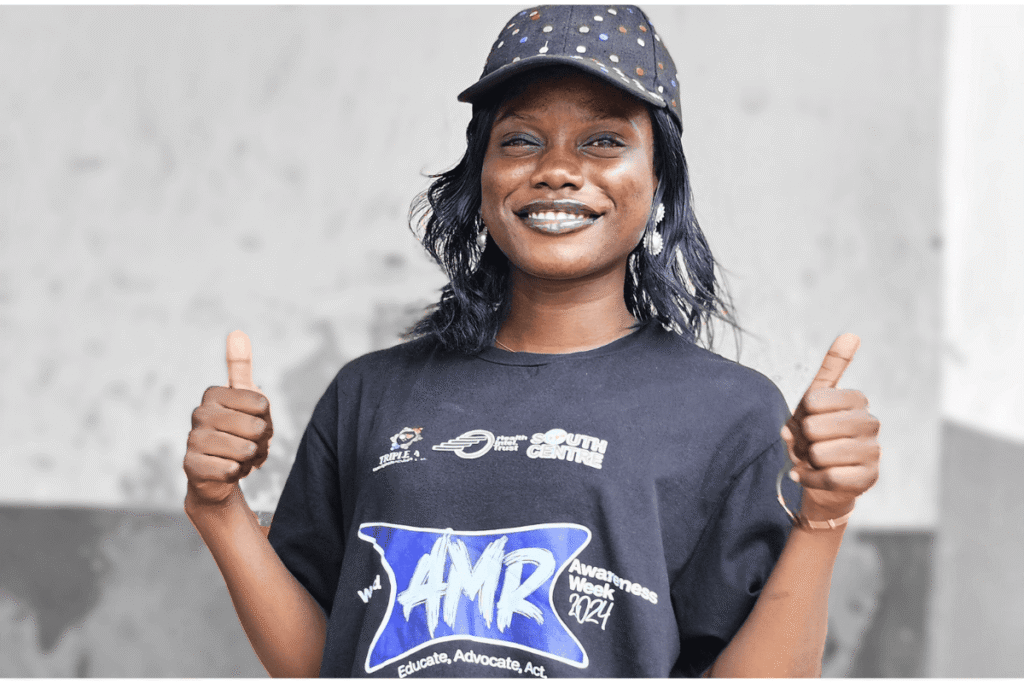
Building on our foundational work in Nigeria, and informed by lessons from previous youth-led AMR initiatives and impact metrics across our programmes, YARC is designed to expand deliberately across LMICs globally. To date, the project has supported a growing network of youth leaders across Nigeria, Jordan, Cameroon, Malaysia, Rwanda, and Tanzania, equipped with skills in AMR communication, community engagement, and One Health advocacy.
These young leaders have reached healthcare workers, farmers, policymakers, students, and underserved populations, including persons with disabilities and internally displaced communities thereby contributing to a stronger, more adaptive AMR response across the One Health spectrum. We are looking to expand this reach across the LMIC countries.
A Necessary Shift for the AMR Community
Our systems for AMR response must evolve. If youth involvement remains symbolic, the future of AMR action will remain fragile. But if youth engagement becomes structured, trusted, and resourced, it can fundamentally transform how communities understand, prevent, and respond to antimicrobial resistance. Therefore, youth engagement must move from presence to influence, and the AMR community must invest now, while there is still time to build the capacities that tomorrow’s response will rely on.
We invite funders, institutions, policymakers, academic partners, private sector actors, and individuals to partner with us in sustaining and scaling youth-led AMR action. Strategic partnerships and financial contributions directly support youth training, community mobilisation, school-based engagement, and the expansion of YARC across the global One Health space.
Supporting this work is an investment in the future stewards of long-term antimicrobial effectiveness.
Learn more about our youth-led AMR initiatives and overall impact, or support the work directly through our donation and partnership channels.
YARC Project Page
The Youth Against Resistance Champion (YARC) initiative empowering the next generation to tackle AMR
AMR Impact Brochure
A comprehensive overview of Antimicrobial Resistance and our strategic interventions.
WASH Off AMR
Read our latest blog on the vital role of WASH in preventing antimicrobial. resistance
Support OHDI
Directly fund research and community policy advocacy for a healthier planet.